Eco Trash Couture
To View Project Details


Pacifica, 2016
A Celebration of the Seashore!
This sculpture was created to celebrate the 50 year anniversary of Cascade Head Preserve on the Oregon Coast. It is made of natural items found along the seashore such as shells, driftwood, rocks, salmon teeth, fins and vertebrae that are strung onto wire and secured to a metal skirt made from upcycled baking sheets. The bodice is made from moss, lichens and bark sewn to burlap with old fishing line.
Pacifica was commissioned by the Nature Conservancy in Oregon.
You can read details about the creation of Pacifica in this blog post.
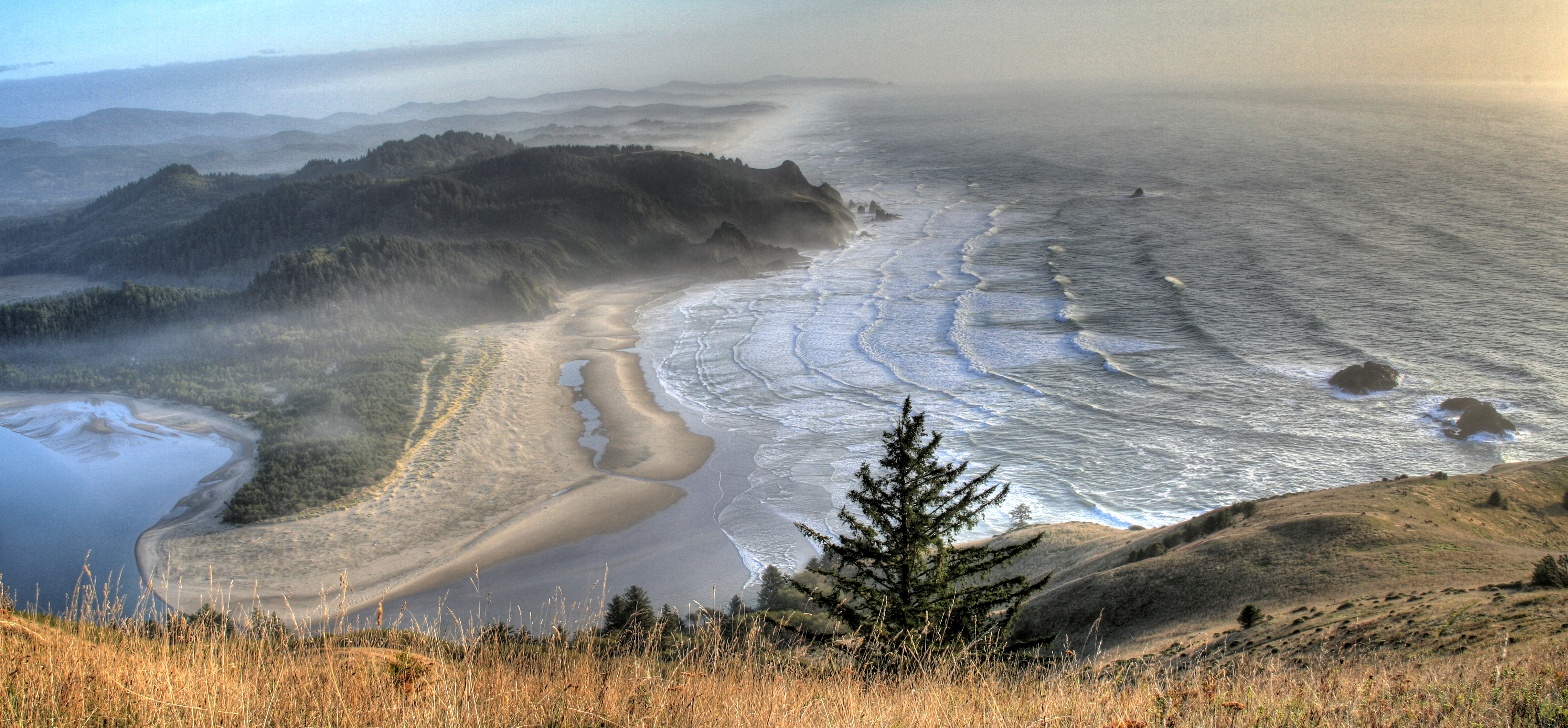
Cascade Head Preserve and the Salmon River Estuary
I love most that first breathe when I step out of the car after a two-hour drive from Portland, OR and inhale the rich smells of Cascade Head. It’s a mixture of the salty ocean with the loamy earth. It is specific to this area where the sea meets the land at the mouth of the Salmon River Estuary. As a child I was allowed to roam this River and the nearby forests at my leisure, spending hundreds of hours quietly watching: noticing the green moss, the green ferns, the green leaves, the green pine trees—infinite shades of green teaming with life. Burying my nose in a mossy tree limb made me feel alive and connected to the natural world. It still does!
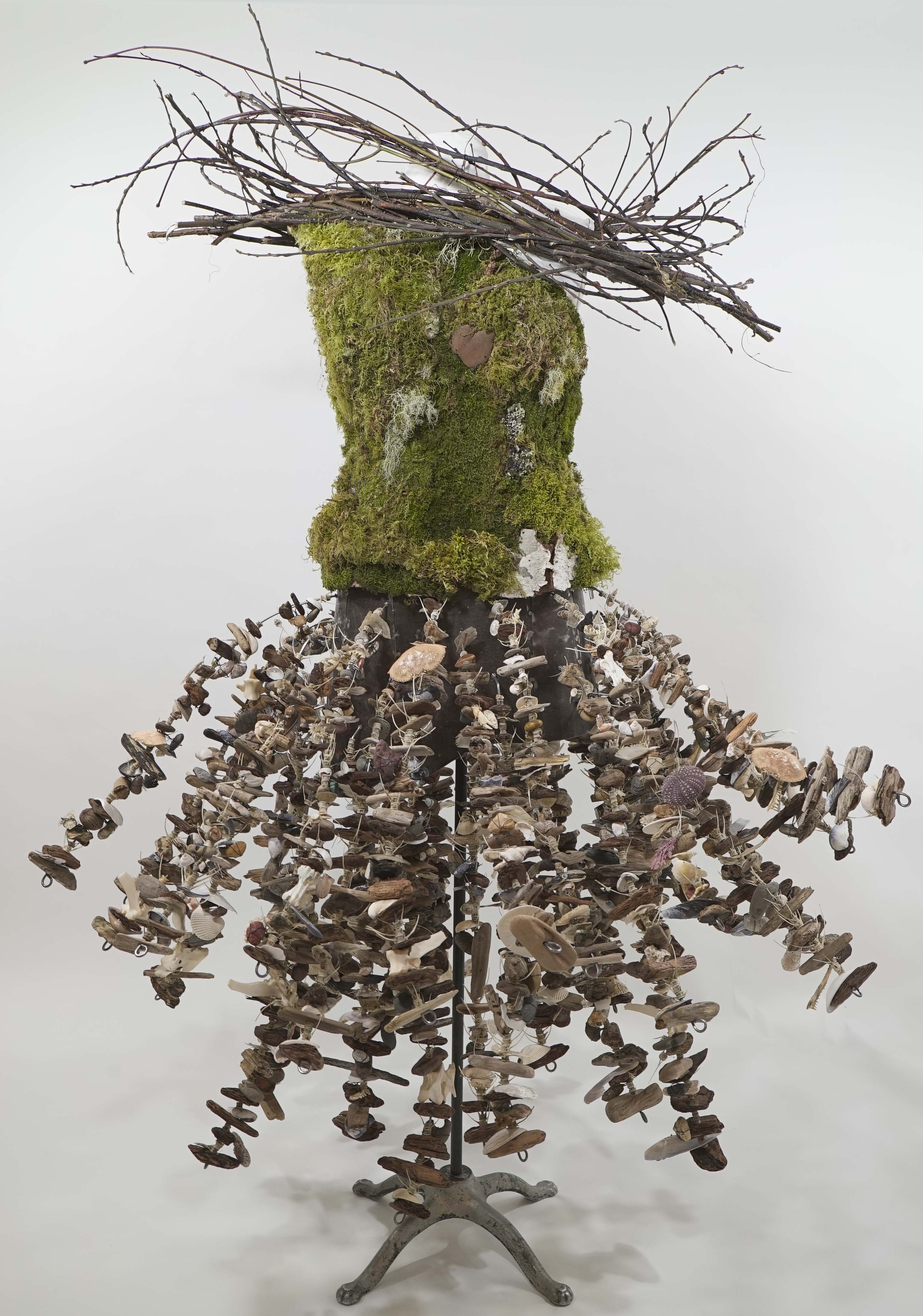
Pacifica
Pacifica is the most personal sculpture I have created thus far. It tells the story of my history, my inspirations, my family, and one of the most powerful forces on earth: the ocean. This sculpture was commissioned by The Nature Conservancy in Oregon (TNC) which is celebrating the 50-year anniversary of Cascade Head, one of their prized preserves and a place central to my being. I first came to this magical area as a child in the 1970s when my parents purchased a small piece of property below the majestic Cascade Head which is on the Oregon coast just north of Lincoln City. They settled on a steep triangle of land thick with elderberry bushes and sword ferns over-looking the Salmon River Estuary. Here my Mom and step-father John (who is a painter, sculpture and builder) designed and built our family a beautiful home. John took over 20 years to construct every inch himself down to each drawer and banister. It is truly the gift of a lifetime as my siblings, nieces, nephews, our spouses, friends, and I have returned again and again for over 40 years!
The creation of Pacifica began at Cascade Head on a rainy February day when I hiked with TNC’s Debbie Pickering, Mitch Maxson and Julia Amato, along with cinematographer Brady Holden, up to the Head and walked along the Estuary to collect materials. Debbie, TNC’s Oregon Coast Ecologist, shared information with us about the ecology of the area that was completely new to me despite my years of walking these paths. For example she taught us how to distinguish different conifer trees from one another, and which plants are edible and used for medicinal purposes.
Brady Holden’s video about Pacifica won two awards at the McMinnville Short Film Festival in October.
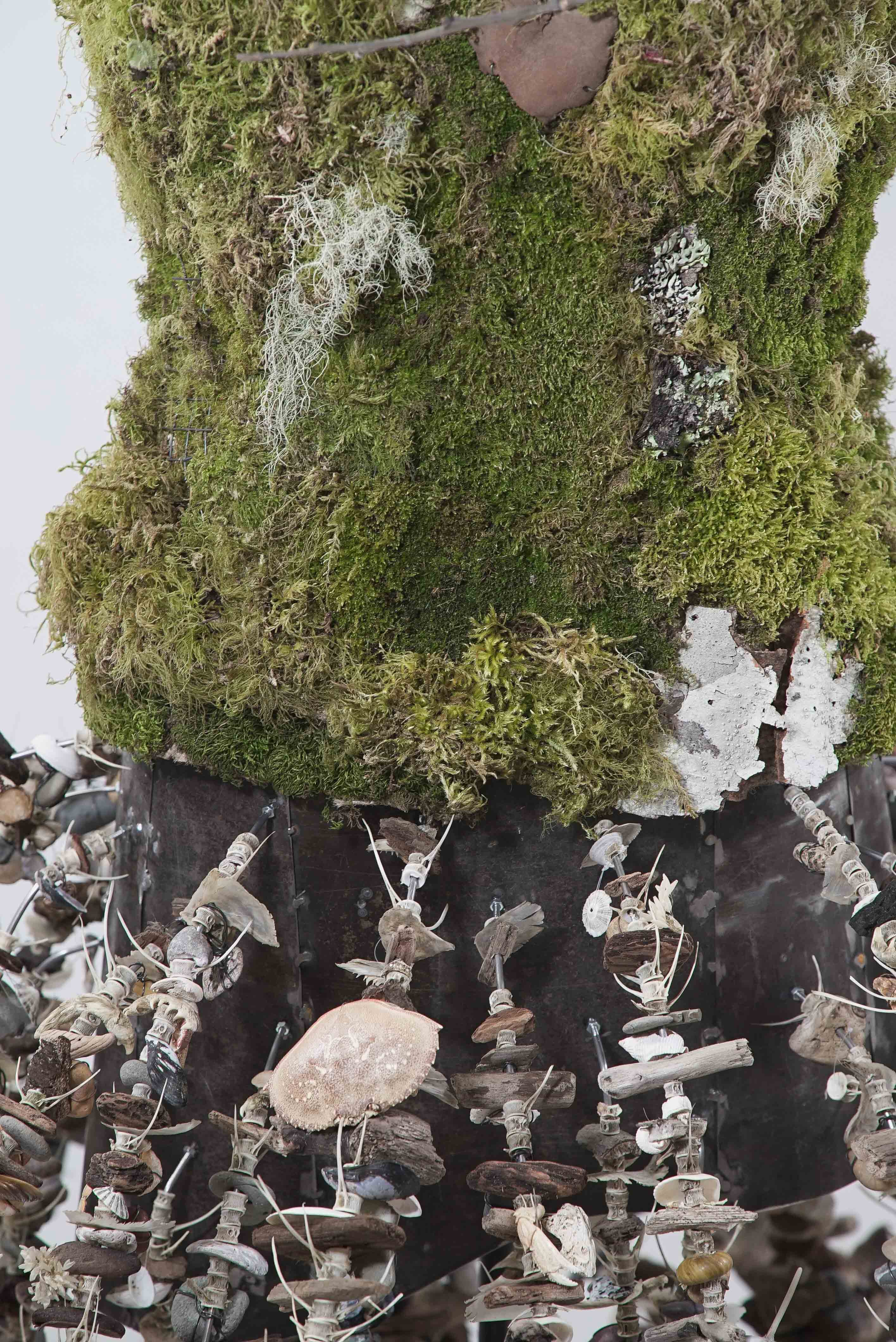
Detail of Pacifica
Unlike my other garments, Pacifica is made primarily of natural objects: shells, wood, rocks, bones and feathers are strung on wire and connected to an upcycled steel skirt; the living bodice is made from moss, branches and pine cones sewn to burlap with reclaimed fishing wire. Debbie determined which items we could include on the sculpture, for example we had to be careful not to collect anything with living barnacles attached to it so as not to inadvertently kill any little creatures in creating the piece. Additionally, Debbie and her husband Dave spent many hours along the sea shore gathering the majority of materials that make up the skirt… I am very appreciative of her special contribution to the creation of Pacifica!
For me, this sculpture is about the connection of the ocean to the land. As a child I was moved by the connections and transitions I witnessed at Cascade Head where the river meets the ocean, the ocean meets the land, and that incredible moment when you break out of the sheltered forest into the open grasslands of the Head. There before you stretches the Pacific Ocean out to our neighbors in Asia and, as you turn around, you can see miles of the Salmon River forever flowing, flowing, flowing. Below our house, sitting on a rock in the estuary I watched the waves crashing, splashing, misting, and foaming. Other times the ocean arrives in the estuary quietly, slowly raising the river as the tide flows in, curious seals floating by with big eyes watching me watch them. It was in these moments I discovered my connection with the earth which has guided me to the work I am privileged to do today, and to creating Pacifica. See more beautiful photos of Cascade Head here.
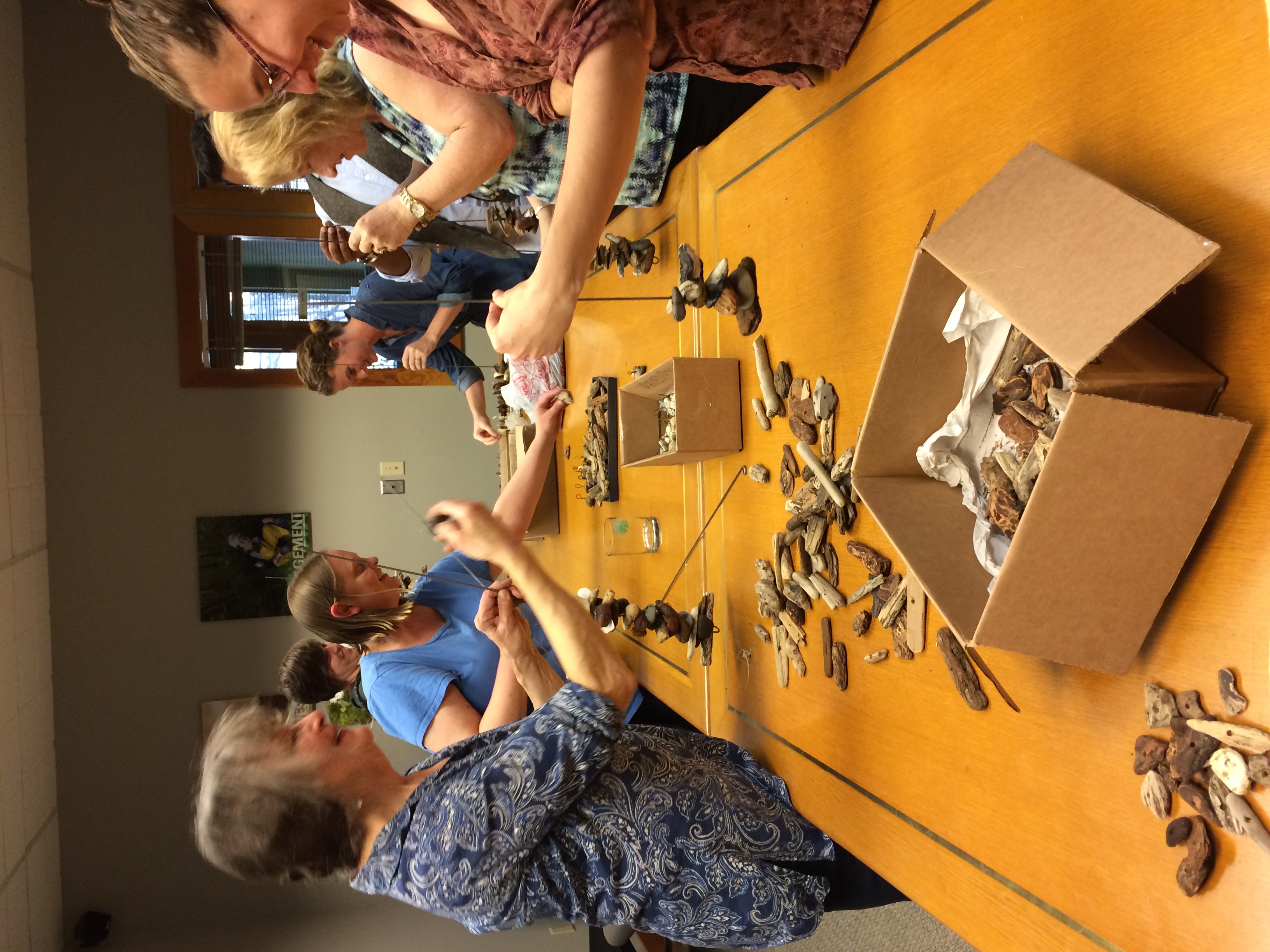
TNC staff and volunteers string the “sea-shore-shish-kabobs”.
I started working on Pacifica right after I finished an upcycled wedding dress called Bella. At the same time I was working on Pacifica I was starting another project called PDX Weather Advisory; both had to be completed at the same time in April. All that to say, there is no way I could have finished this sculpture (it took 270 hours) without the help of many volunteers! Over 20 people helped me in several work parties at the Oregon TNC headquarters and at SCRAP, a local reuse store in Portland. Volunteers prepared materials and helped to string the “sea-shore-shish-kabobs” made of drift wood, shells, rocks and fish bones that make up the skirt. Early in the project the OCEAN volunteered an invaluable gift to Pacifica: a huge pile of old Salmon bones was discovered by a TNC ecologist at another nearby estuary. The teeth, fins and especially vertebra became an essential part of the skirt. The little vertebra created space between the rocks, wood and shells which not only kept the wires from becoming too heavy, but they also helped to extend the materials (which we used ALL of) so that I had enough to complete the skirt. This also created a more open and airy visual feel to the skirt.
Pacifica has been on display this summer at the Bridgeport Shopping Center outside of Portland, TNC’s Julia Amato created a beautiful display located in a shop window on the way to the movie theater. In October Pacifica will be showcased at FashioNXT, a celebrated fashion week in Portland, OR. It will travel back down to Salmon River Estuary at the end of October for the 50 year celebration of Cascade Head Preserve, and then in 2017/2018 Pacifica will join the rest of my work in a solo exhibition in the Atlanta Airport for one year.
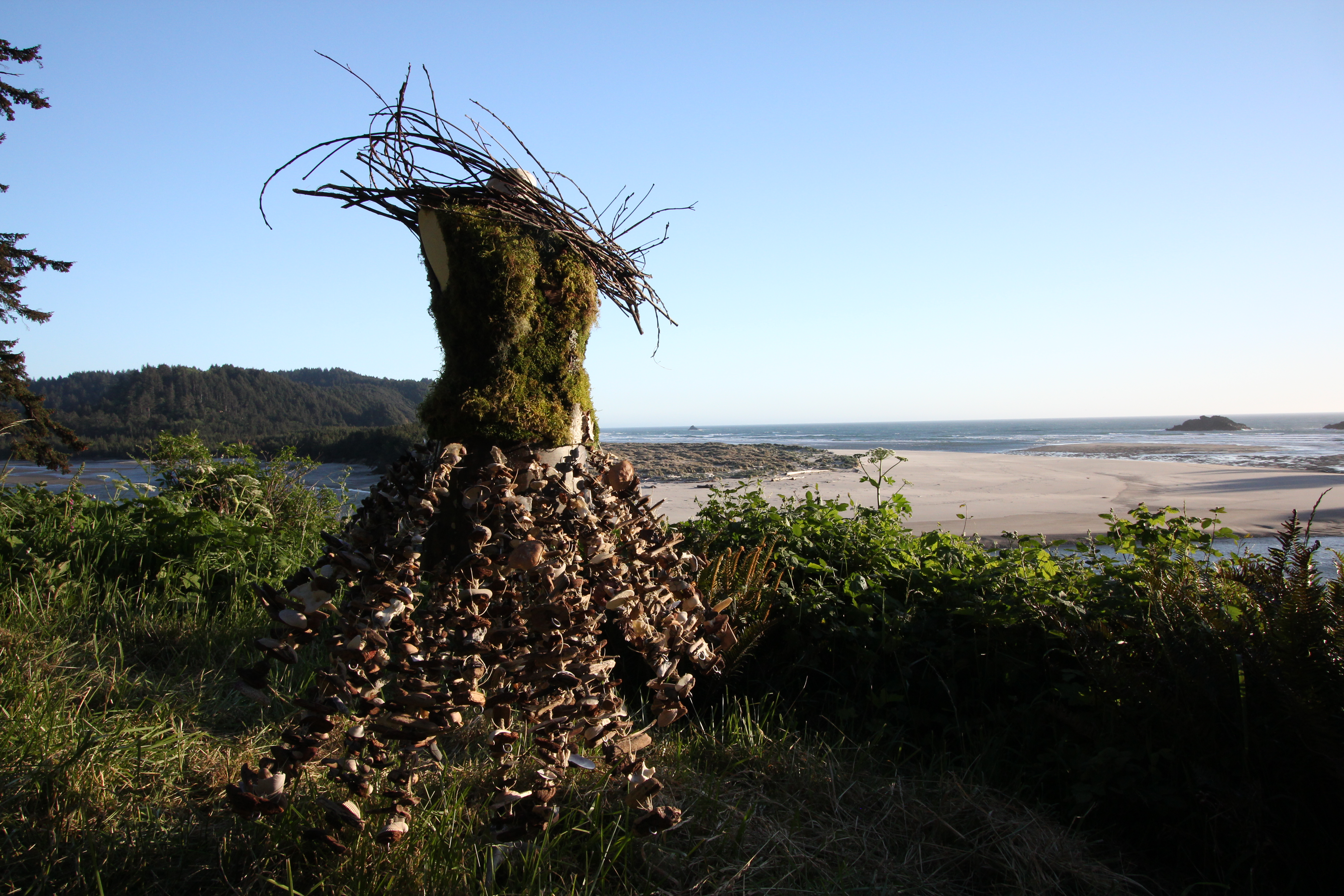
Pacifica above the Salmon River Estuary
For me Pacifica represents the wisdom of ancient forests regenerating themselves for billions of years. As leaves, shrubs, grasses and trees die and fall to the ground they become food and shelter for other life to grow; at Cascade Head I learned that in nature there is no such thing as waste. Pacifica also captures that sense of discovery the ocean offers as it delivers little gifts along the seashore every day. The sea is so comfortably consistent; for decades and centuries, for most of the life of this planet, the rhythm of the waves has been present like the heartbeat of the earth– the heartbeat of Pacifica.
A special heartfelt thank you to all the staff of The Nature Conservancy for each of your special contributions to this project: Julie Fitzgerald, Debbie Pickering, Julia Amato, Mitch Maxson, Deanna Brown, Christine Kessler, Kate O’Neill, Joe Buttafuoco, Teri Stoeber, Megan Fairbanks, Meredith Stewart, Nav Dayanand, Kim Lepre, Molly Dougherty
Additionally, I deeply appreciate the following individuals and organizations for your time, various contributions and encouragement:

Kevin welding the skirt
Nicole Morris-Judd
Brady Holden
Dave Pickering
Kevin Takalo
Palo Alto Software
Bridgeport Plaza – Mallorie Goody
SCRAP – Elizabeth Start and Lisa LeDouxAshley Smithers
Carol Knutson
Marilyn Ellis
Helena Tesselar
Myleen Richardson
Norma Gregor
Amarette Gregor
Jayne Vetter
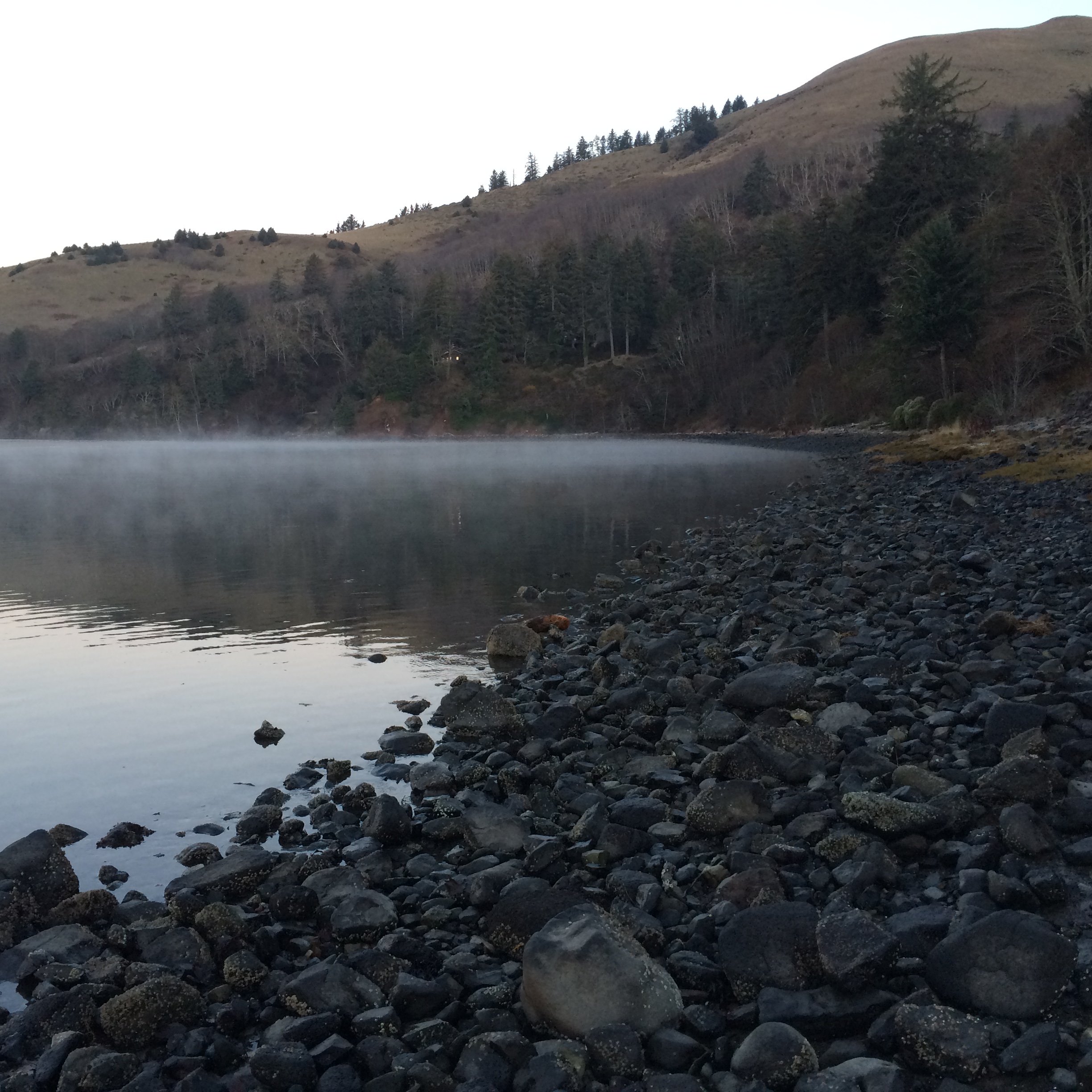
Morning view of Cascade Head from the Salmon River
Claire Darling
Gillian Nance
Cynthia Cada
Pat Reisinger
Harold Broughton
Lexie Ladd
Russel Parks
Julia White
Tiff Valentine
Tami Wheeler
Rose Lawrence
Ben Lawrence
Dave my neighbor
…and anyone else I forgot to mention!!

Gillian brushing Salmon teeth at SCRAP
Photo Credits: All photos by Nancy Judd except:
“Cascade Head and the Salmon River Estuary”: Jack Doyle
“Pacifica” and “Detail of Pacifica”: Brady Holden
“Pacifica above the Salmon River Estuary”: Nicole Morris-Judd
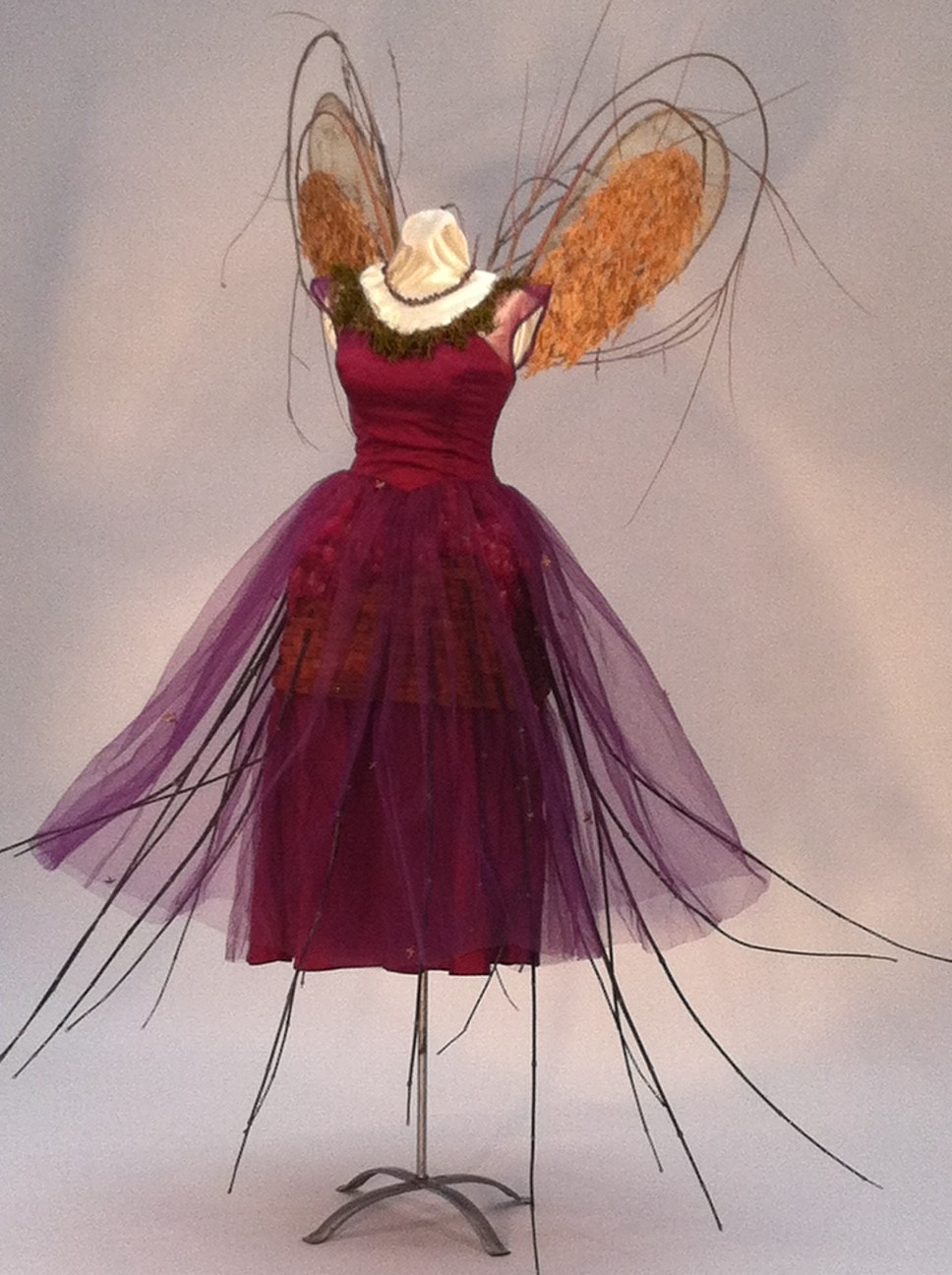
“Opal” by Nancy Judd
This spring of 2013 I was invited, along with 15 other Santa Fe artists, to create a new sculpture for a fundraiser for the Nature Conservancy and the Santa Fe Farmers Market. The event is called “Picnic for Earth” and is organized by the Patina Gallery next to the Santa Fe Plaza.
Each artist was given a beautiful oak picnic basket and encouraged to transform it in anyway that inspired us . The day I picked up my basket from the Patina Gallery, I took it home and buried it in the back yard! Having worked exclusively with trash for the last 15 years, the newness of the basket was blinding to me. It felt strange and pretty ironic to intentionally ruin the new basket but such are the dilemmas I face as an environmental artist! So, first I submersed it in my rain barrel, and then I buried it in the dirt. When I went to dig it up a month later, it was frozen in the ground and took me several weeks to finally unearth.
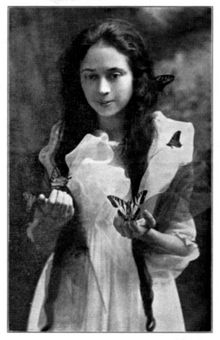
Opal Whitely
The inspiration for this piece I knew had to come from nature, but I was not clear exactly what that would be until, one morning, I awoke thinking about Opal Whiteley. As a teenager I had read “The Story of Opal”, the diary of a young girl living a hard life in logging camps amongst the forests of western Oregon. I remember being very inspired by her vision of, and conversations with, the spirits of the natural world. Creating a fairy that personified the spirit of the land seemed like a perfect fit for this project.
I had read Opal’s diary at Cascade Head Preserve, a Nature Conservancy site on the Oregon Coast. My parents had bought adjacent land in Cascade Head Ranch in the 1970s and had built a house overlooking the Salmon River Estuary. Starting when I was 7 years old, I had spent most weekends and summers at Cascade Head.
I am very grateful to the Nature Conservancy because it was on their land that I developed my appreciation for nature, which lead to my career in environmental education. It is a great honor to create this piece to benefit the Conservancy and the Santa Fe Farmers Market, which I visit religiously every week.

Nancy collecting materials at the Santa Fe Canyon Preserve
In addition to the picnic basket, I used a vintage dress given to me by a friend; plants that I collected at the Conservancy’s Santa Fe Canyon Preserve; and dried flowers from the Santa Fe Farmers Market. The branches are from different types of willows; the seeds on the wings are from a box elder; the necklace is made from juniper berries; the pods on the dress are clematis; the foliage around the neck is juniper mistletoe; and the petals on the picnic basket are dried peonies, marigolds and roses from the Santa Fe Farmers Market.
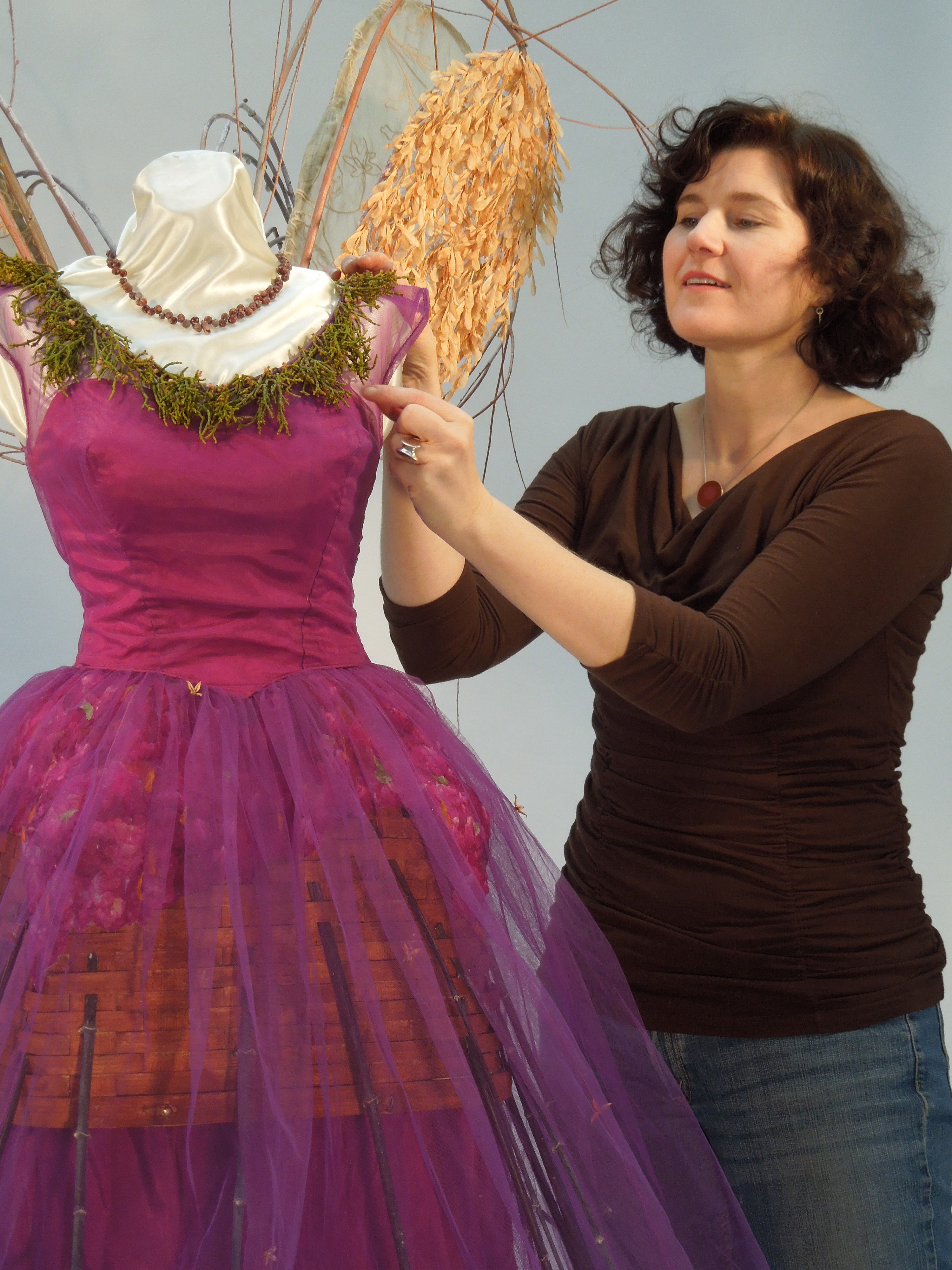
Detail of mistletoe and picnic basket on” Opal”
I did not know that the chartreuse foliage around the neckline was mistletoe until someone at the Nature Conservancy identified it for me. After a bit of research, I realized that it is a perfect fit for this garment. Mistletoe is a parasitic plant, deriving nutrients from its host. It is reported to have “a disproportionately pervasive influence over its community”. It can kill its host through invasion, but is also said to have a positive effect on biodiversity, providing high quality food and habitat for a broad range of animals in forests and woodlands worldwide.
As the spirits of nature create an image that we might recognize as human, what more perfect plant than mistletoe could they chose? Humans, like mistletoe, are often invasive and destructive, but our actions can also be beneficial, as seen by inspiring organizations such as the Nature Conservancy and the Santa Fe Farmers Market!
One morning while creating this dress, I awoke with the following poem in my head. It is the first time I have written a poem to accompany a garment and it felt like a perfect fit.
More and more, the spirits of the land
felt forgotten by humans,
and before they disappeared altogether
they decided to make themselves seen.
So branches, flowers and seeds
wove themselves together
and created a sprite to say:
As you pollute the air, the water, the soil,
as you cause plants and animals to die away
as you change the very earth itself
DON’T FORGET US.
While you live your lives–
dancing, working, singing, loving, praying–
remember our wildness in yourselves!
Nancy Judd, 2013
The opening for the “Picnic for Earth” is at the Patina Gallery on April 5, 2013 from 5:30pm-7:30pm. The show will be on display through April 26th. Patina Gallery is located at 131 West Palace Avenue, Santa Fe.
If you live in or near Santa Fe, I hope you can come to the opening on the 5th to see “Opal” in person!
Also, watch this video created by the Nature Conservancy about creating Opal.
