Eco Trash Couture
To View Project Details


The first in a series of blog posts about the true costs of the clothing we wear
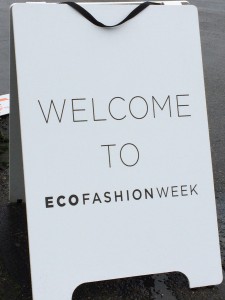 Ask me to make a dress from a pile of trash and the inspiration flows! Ask me to make one from “normal” fabric and…it’s not quite that easy. Thus, it was an unusual challenge when I was invited to participate in a fashion week event last month in Seattle. Fashion? Couture maybe, but I have a dubious relation with fashion. However, this event was no normal fashion week. This was ECO FASHION WEEK (#EFW), the world’s largest sustainable fashion event happening, in 2016 for the first time, in Seattle Washington! Originally launched in Vancouver, BC, Canada in 2010, they sought to break into the international market by bringing the event to the US. Held over four days with two jam packed evenings, the event was filled with runway shows, a meet and greet, and a full day of presentations called the Collective Conversation. Meant to explore the environmental and social issues related to the fashion industry, I was invited to both participate as a panelist in the Collective Conversation and to share new work on the runway. The pace was thrilling and exhausting!
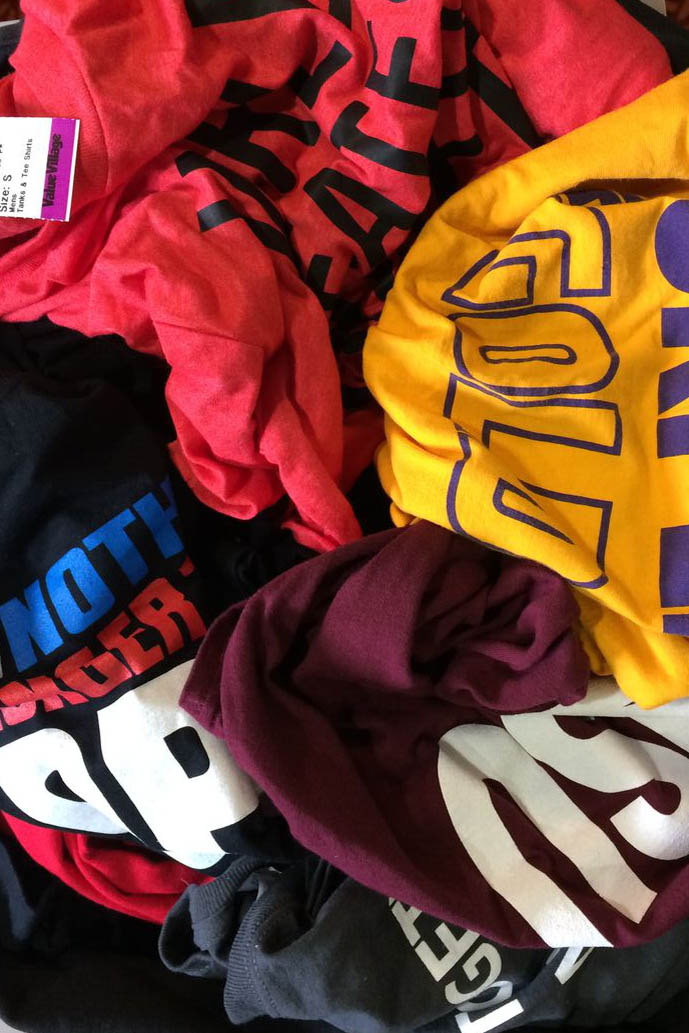
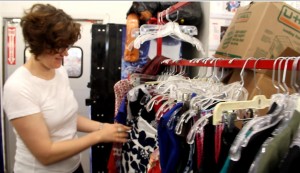 For the runway portion of EFW, I was one of 10 designers and stylists that participated in the Runway ReImagined: Project 8.1. So there I was in Value Village at 6 o’clock in the morning, standing toe to toe with the other clothing sorters except I was pulling clothing for fabric and labels, not for resale (hence my foray into creating a garment made solely from repurposed “normal” fabric). Individually, each of the 10 designers used 8.1 pounds of recycled clothing to create a small collection of garments. But collectively, we created couture weighing a total of 81 lbs. What is the significance of 81lbs, you may ask? It’s the staggering weight of textiles that the average North American discards annually! Hard to imagine isn’t it?
The EPA estimates that 3.8 billion pounds of post-consumer textile waste goes into the landfill every year.1 Luckily most of these textiles we discard — even if they’re worn, torn, or stained — can be recycled! You can even recycle a single shoe! Items simply need to be clean and dry. There are lots of thrift stores happy to take your textiles, such as one of the main sponsors of the 8.1 challenge and Eco-Fashion Week: Value Village (aka Savers, Inc.). The clothing recycling market can reuse and recycle 95% of the enormous amount of apparel that we purchase and discard every year. About 45% of discarded clothes are usable clothing, however, because of the huge glut of clothing in the world only a small percent is resold in secondhand clothing stores. The rest is sent to developing countries for reuse. The other 50% of discarded clothes are turned into a variety of new products where 30% become wiping cloths (used in repair shops, construction, stores, and maintenance or custodial departments) and 20%, when processed back into fibers, are turned into paper, yarn, insulation and carpet padding.2 Unfortunately, of the 81lbs of clothes we throw away every year, the clothing recycling market is only capturing 15%. The rest goes into landfill.
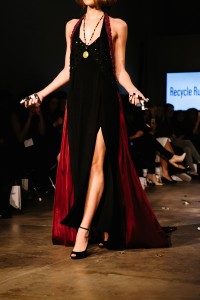
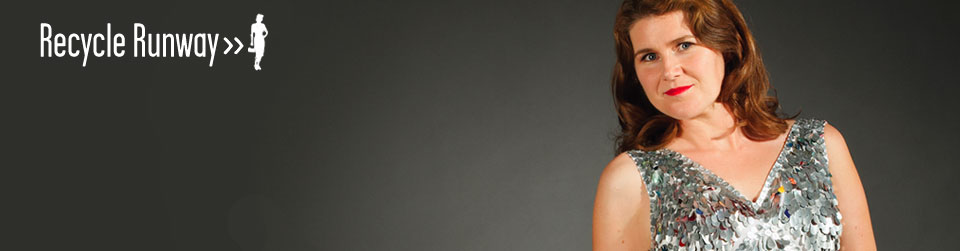
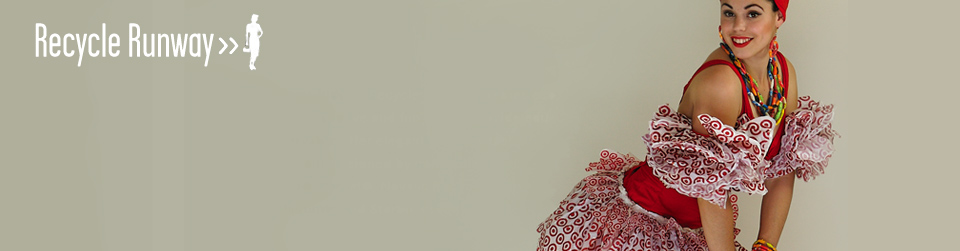
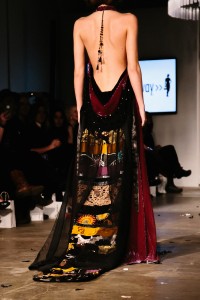 However, the disposal of textiles is only one problem with the fashion industry. Let us pause here as our minds conger up images of slim models with hair blowing in the wind, garments unimaginably sleek, revealing sensuality, or audacious juxtaposition usually affordable only through extravagant expense. My first piece in the collection (shown in the images to the left) I created for ECO FASHION WEEK was meant to represent this notion of fashion and the opulence of conspicuous consumption. But let these realms stay in the pages of Vogue, Elle, W, and GQ.
The thing is, when I talk about the fashion industry I am also referring to the sneakers worn by 8-year-old boys, T-shirts worn by the guy next door, and the bathrobe worn by your grandma. All our attire including coats, shoes, hats, and accessories are part of this mammoth industry. Which by the way, is the SECOND most polluting industry in the world after oil–YES, the second!
This blog post starts a series about fashion and its critical role in the exploitation of resource use and in climate change. In the series, we will explore 81lbs of waste, pollution and mistreatment from fast fashion, the exportation and globalization of toxicity, and what steps we can take individually and collectively to combat our decreasing value of clothing. I will return to more about my ECO FASHION WEEK collection and performance piece in this series, but first I am going to share with you some of the information I learned in my research preparing for the project.
I thought this series a very fitting way to begin the New Year as we open ourselves to resistance against the old ways of thinking that no longer serve us. Continue reading the next post in the series here.
1 Digitek, Potomac. “SMART: Consumers & Green Advocates.” Professional Trade Association. SMART: Secondary Materials and Recycled Textiles Association. N.p., 12 Aug. 2015. Web. 19 Dec. 2016. http://www.smartasn.org/consumers/index.cfm#
2 SMART: Secondary Materials and Recycled Textiles. The Lifecycle of Rags. N.p., 2015. Web. 19 Dec. 2016. http://www.smartasn.org/consumers/lifecycleofrags.pdf
This series was co-researched and co-written with Nicole Morris.
Photo Credits: All photos by Nicole Morris, except runway photos by Alfonso Arnold.
The video above was recently released by the Huffington Post about the work I do. It is part of an excellent series they are doing called RECLAIM: REDUCING THE WORLD OF WASTE . In this series, they cover positive stories across the globe ranging from smog vacuums in China; to Rob Greenfield’s story of wearing his trash for a month; to a story called, “You Make Reckless Decisions When You Shop After Work.”
The Huffington Post piece focused on my use of fashion as a means to engage people in conversations about what is happening to our planet. As I prepare to dive into the world of fashion at Eco Fashion Week in Seattle this week, this is a perfect focus.
At EFW, I’ll be participating in two ways but I’m going to talk about the second event first. On Friday November 4th I will be part of a panel, during Session 2, in a day-long event called the “Collective Conversation” which explores how to make our clothing more sustainable. I will discuss this in further detail later this month in a blog post covering what I learn this week. For now I want to share with you one staggering piece of information I discovered recently:
FASHION IS THE SECOND MOST POLLUTING INDUSTRY AFTER OIL & GAS!
At first this seemed unlikely to me, especially considering industries such as nuclear energy and weapons. But as I thought about it more I realized that each of the 7 billion people on this planet wear cloths and many have copious amounts of them! The price of fashion is huge when we consider the varied activities that take place around clothing, for example:
- the pesticides used to grow cotton;
- the petroleum products used to make nylon and polyester;
- the staggering amounts of water that are both used and polluted in the garment industry (it takes over 700 gallons of water to make ONE T-SHIRT!);
- the overwhelming energy requirements to power the massive facilities where our clothes are dyed, bleached, woven, cut, and sewn;
- the energy used on washing and drying clothes;
- all of the packaging used to protect the materials and finished garments as they move from one place to another before they end up in our closets;
- the fuel used and pollution created to transport clothes across the world and back again;
- the waste created while we wear clothes and later dispose of them (the average American throws away 81 lbs of textiles a year!)
- And then of course there are the often unfair and unsafe working conditions for the millions of people in the garment industry.
When you consider the many and far reaching arms of the fashion industry, you can begin to understand why it holds this regrettable distinction!
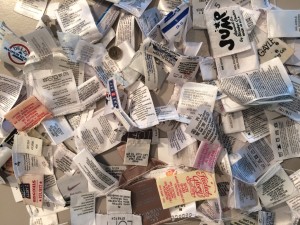
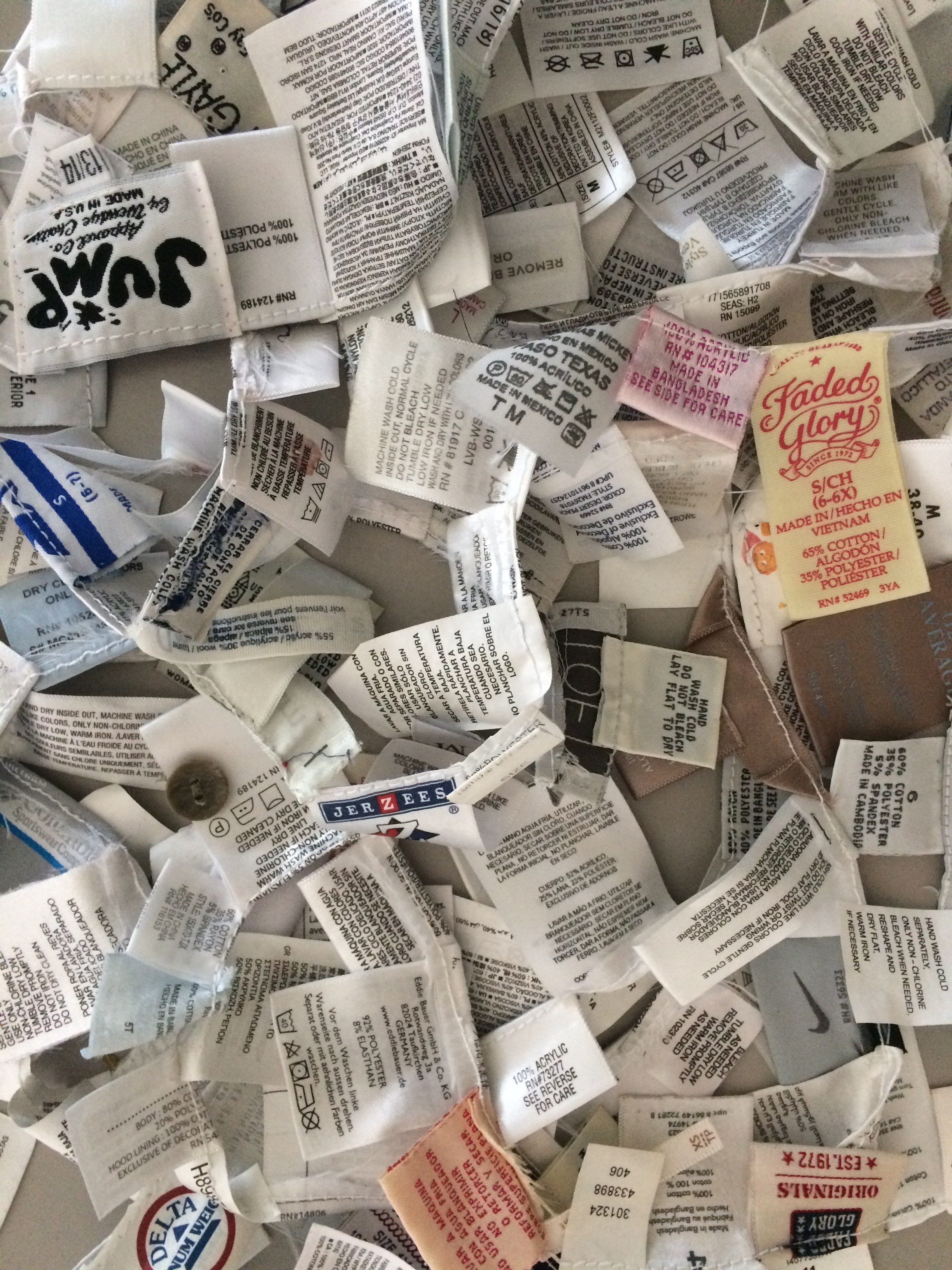
The first event I will present in is a segment called RUNWAY REIMAGINED on Wednesday November 3rd where I will be unveiling a visual exploration of the price of fashion on the runway. (If you live in Seattle, please come! Details can be found here: ) For the show, I have created three garments that raise questions about the labels in our clothing and the stories they tell us about the environmental and social costs of what we wear. I consider this work to be performance art, using the fashion stage as my “canvas”. It’s new territory for me and I’m very excited!
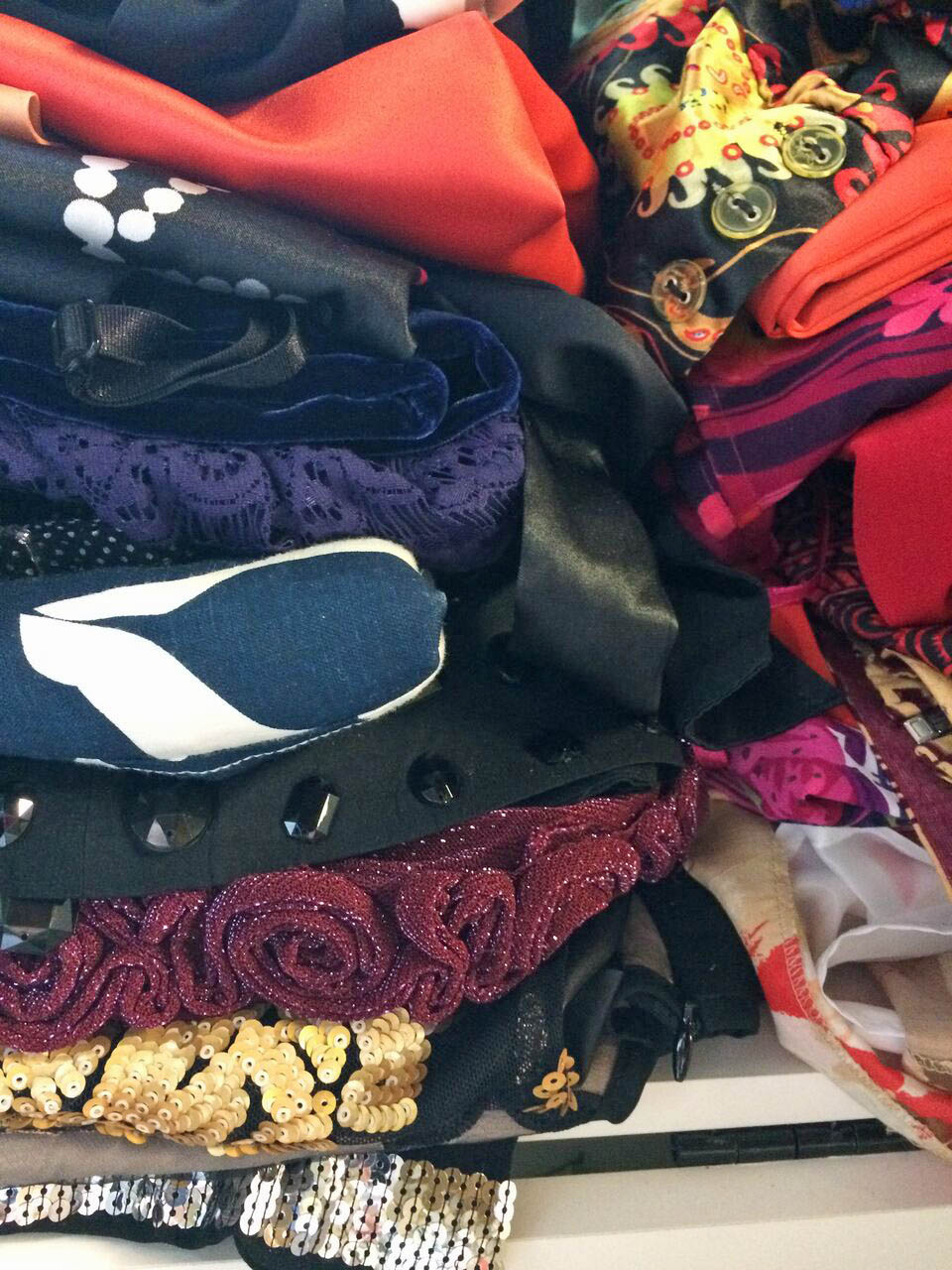
Below are photos of the materials I am working with for this collection. After the garments are unveiled at Eco Fashion Week, I will send out photos and video of the full garments and collection. Stay tuned!
 |
 |
 |

