Eco Trash Couture
To View Project Details


Yahoo
Designer turns trash into high fashion.
 By Joanna Douglas, Shine Staff
April 25, 2011
Read article on-line.
Designer and environmental educator Nancy Judd creates wearable art out of recycled materials
Once an odd and unusual concept, in recent years, “recycled clothing”—that is, wearable garments made from unconventional materials—have become more and more mainstream . Most every season of the reality show “Project Runway” features a challenge where contestants use non-traditional items to create new sartorial designs, and more than a few young women have made duct tape prom dresses. We’ve even seen edible dresses made out of eggplants and bubblegum. That said, we love seeing people get creative with their fashion, especially when they re-purpose used materials and send a positive message about recycling.
Artist and environmental educator Nancy Judd, of Santa Fe, New Mexico, turned down a spot on “Project Runway” because she’s happy with her own project, Recycle Runway. She creates high fashion from what others may perceive as trash, all while teaching people about conservation.
“I love taking garbage—something that people want to push away from and not think about—and transform it into something elegant,” Judd recently told CNN. “I love when they look at a dress and say, ‘Wow, those are bottles or cans,’ or whatever.” While she says maybe designers are doing good things, she likes remaining an outsider. “I am an artist making wearable art,” she told CNN. “I’m also not attracted to the fashion industry. It creates a tremendous amount of waste, and there are a lot of social justice issues.”
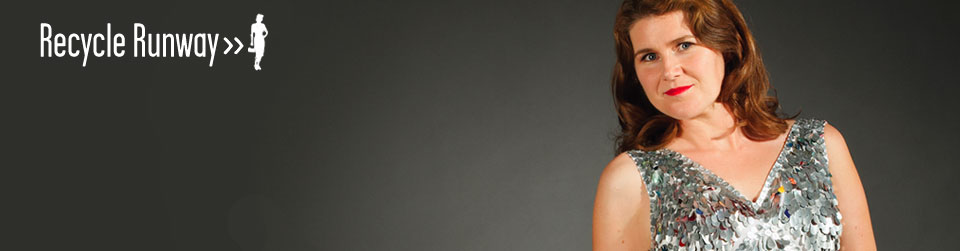
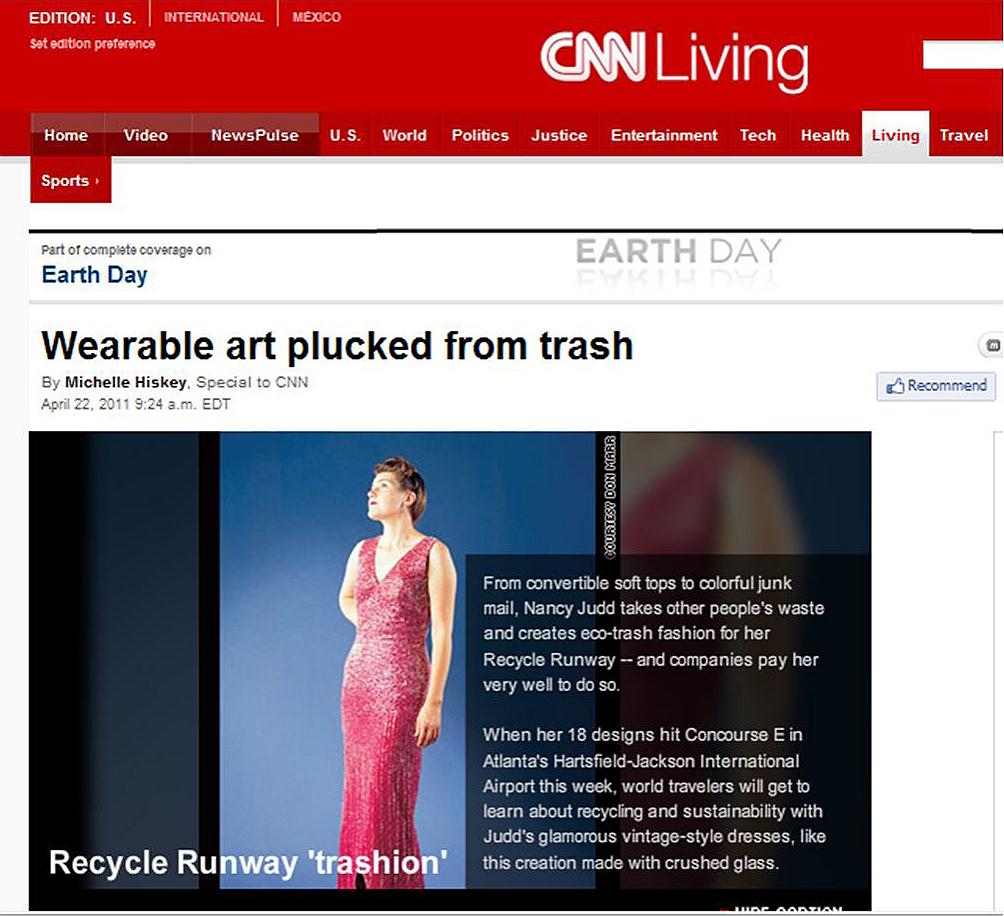
Judds work has been displayed in malls, museums, and airports across the country, and her latest exhibit will be featured at Atlanta’s Hartsfield-Jackson International Airport this week. Don’t worry if you can’t make it—we’re highlighting the best pieces here. First up: The Glass Evening Gown. This stunning dress is made from 12,000 pieces of crushed glass! The Glass Packaging Institute commissioned this gown and the glass jars and bottles used came from the City of Albuquerque’s recycled program. The foundation for the garment was made of old upholstery.
Flip through the slideshow and head over to Recycle Runway for more on Judd’s creative designs.
CNN
Wearable art plucked from trash
 By Michelle Hiskey, Special to CNN
April 22, 2011 9:24 a.m. EDT
Read article on-line.
(CNN) — Nancy Judd turns an orange rind into sequins. A can of Coke becomes shiny bangles. Plastic bags melt into chic crinkly fabric.
What others call trash is her high fashion.
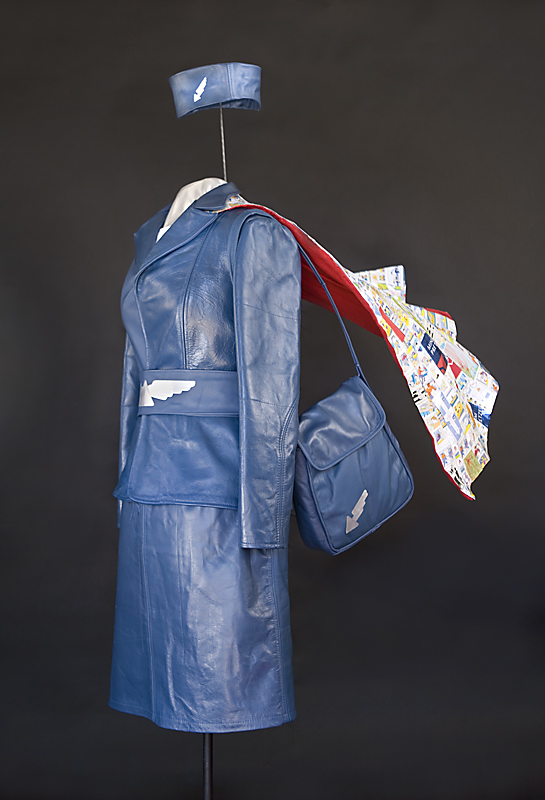
Her newest creation is “The Environmental Steward-ess,” a 1940s air hostess suit sewn from leather seat covers donated by sponsor Delta Air Lines. Judd stitched the suit’s superhero cape from safety cards once found in seatback pockets.
Her apparel is more for learning than wearing.
“I love taking garbage — something that people want to push away from and not think about — and transform it into something elegant,” said Judd, 42, of Santa Fe, New Mexico. “I love when they look at a dress and say, ‘Wow, those are bottles or cans,’ or whatever.”
After her cocktail dress made of vinyl Obama-Biden banners made it to the Inauguration, Judd declined a spot on “Project Runway.” She prefers grass-roots projects that she details on her website Recycle Runway.
“I am an artist making wearable art,” she said. “I’m also not attracted to the fashion industry. It creates a tremendous amount of waste, and there are a lot of social justice issues, although a lot of designers are doing good stuff.”
Her work has been displayed across the country at shopping malls, museums and airports. The latest installation of her “Recycle Runway” exhibit of 18 eco-trash garments will go up this week at Atlanta’s Hartsfield-Jackson International Airport.
Judd recently spoke with CNN.com about her creative process.
CNN: How did you start making recycled fashion?
Judd: My mother owned a gallery and directed a college of art, and I spent my whole life in art classes. I loved to sew. In college, I got a degree in art and sociology. One year, my art school got a new pop machine. The garbage can next to it grew with all the pop cans. Seeing them thrown out just seemed wrong. I put a recycling bin next to the pop machine. I started wondering: Where does trash go? Who picks it up? After that, my career path was in solid waste and recycling. As the recycling coordinator for Santa Fe, to promote a weekend-long exhibit of recycled art, I threw together a little outfit made of bubble wrap. Each year, I made another dress, getting more and more intricate. Now, I can’t imagine using anything but trash. If somebody gave me a $200-a-yard fabric, I would be at a loss.
CNN: Besides the landfill, where does your art come from — the vision?
Judd: Honestly, it feels like divine intervention. Artistically, I have a sense of confidence that doesn’t really line up with the rest of myself. I don’t know why I can say to Delta or Toyota, “Send me your waste and I will create something I know you will love.” All I can say is that my art comes from a spiritual, creative relationship that is so interesting to me.
CNN: Do you have a favorite piece?
Judd: That’s like picking a favorite child. The Eco-Dress really pulls together everything. It’s a Scarlett O’Hara-style dress made of [scrap paper] pledges written by 2,000 children across the country. Having people involved really feeds the mission of what I’m doing.
CNN: Do you use a special sewing machine?
Judd: I use a regular one from my sponsor Janome. I’ve sewn inner tube tires fine, and the soft top of a Toyota convertible.
CNN: Explain how the stewardess cape of safety cards only looks cheery.
Judd: The cards are really colorful, really whimsical. I researched the super-heroine Wonder Woman, created in the 1940s — the same era this type of suit was worn by Delta stewardesses — by a psychologist to provide a strong role model for young girls. In addition to her invisible plane and bulletproof bracelet, Wonder Woman was given a lasso of truth that made men be honest. This garment is about being a role model who is strong and stands up for the environment. The safety cards are scenes of people preparing for a crash. The cards ask, “What if?” That sort of emergency is happening around the world with the environment, because of our decisions. My art is about what we can do in our lives to live lighter on the Earth, and to prepare ourselves. Like the safety cards, the message is about conservation and preparation.
CNN: What details are less obvious?
Judd: The cape looks windblown because of the wire armature holding it up, made from yard signs from the Obama campaign.
CNN: How much do you charge for a commission, and who pays?
Judd: About $10,000. A dress will take anywhere from 150 to 450 hours to make. The contract allows me to keep the dress for future exhibitions. I only work with organizations that are doing something substantial for the environment. One of my sponsors, Coca-Cola, is creating bottles that are plant-based and has started the first bottle-to-bottle recycling plant!
CNN: What are some of the environmental hazards of creating eco-conscious art?
Judd: I only iron plastic outside. I wear a heavy-duty respirator mask around chemicals and when I drill metals.
CNN: Is your tetanus shot current?
Judd: It should be, but I don’t think it is.
CNN: What size are your dresses?
Judd: For a while, I made all my pieces about a size 12, because honestly, I was the only available model.
CNN: Describe a future piece.
Judd: The Biodegradable Dress starts with cheesecloth — a lot of people in Santa Fe make their own cheese. Attached are sequins in a turn-of-the-century pattern. The sequins are being made in public workshops from oranges and tangerines. After eating, people punch peels into small circles and dry the circles on a pin.
This dress will be sturdy enough to last 100 years. Throw it on a compost pile, and it could disappear in a month.
Michelle Hiskey writes occasionally about the creative process for CNN.com.
Terminal U
Delta Air Lines’ superhero stewardess uniform unveiled
The Environmental Steward-ess
April 14, 2011
Read article on-line.
A “superhero stewardess” uniform, made entirely out of bits of Delta Air Lines scrap, is among the eye-popping pieces of eco-fashion gracing an exhibition at Hartsfield-Jackson Atlanta Airport.
Delta Air Lines commissioned Nancy Judd – an artist known for turning trash into “couture fashion” – to create the striking uniform, which she has aptly named “The Environmental Steward-ess”.
It is one of 18 centrepieces on display at the artist’s “Recycle Runway” exhibition, which will run in Atlanta Airport’s International Concourse E until April 2012.
The uniform, and the matching accessories – a hat and purse – have been sewn from worn-out leather seat covers from Delta planes.
The outfit wouldn’t be complete without a superhero cape – for a super cool throw-on and-go look.
The cape is made up of old safety cards, plane tickets, Delta Sky magazines and pretzel wrappers, stitched into worn pillow cases, before being lined with an old Delta blanket.
To wrap up, the artist used aluminum cans for the Delta logo, which is featured on the purse, hat and belt.
As TERMINAL U reported earlier this year, Delta Air Lines is among a few major carriers to join the “upcycling” craze, where cabin fixtures and fittings that would otherwise be discarded are refashioned into something of greater value- and sold off as fashion.
USA Today
Airports cater to art lovers with intriguing installations
 By Harriet Baskas
April 12, 2011
Read article on-line.
At Hartsfield-Jackson Atlanta International Airport, you’ll soon find an exhibit of couture fashions made entirely from trash by Nancy Judd of Recycle Runway.
Included among the 18 pieces is an outfit commissioned by Delta Air Lines that Judd has dubbed “Environmental Steward-ess.” The vintage-style flight attendant uniform, which includes a hat and purse, is made from worn-out leather seat covers from Delta planes. The purse, made by Tierra Ideas, has a liner made from recycled wool curtains. The best part: The cape, which was inspired by Wonder Woman’s invisible plane from early comic book days, is made from outdated seatback safety cards, discarded pretzel bags, old plane tickets and past issues of Sky Magazine.
Find it: The Recycle Runway exhibit opens April 18th and continues until April 2012 in nine cases on Atlanta International Airport’s Concourse E. A video about Recycle Runway will also run on the airport’s CNN channel at each gate.
Chic Republic
April 8, 2011
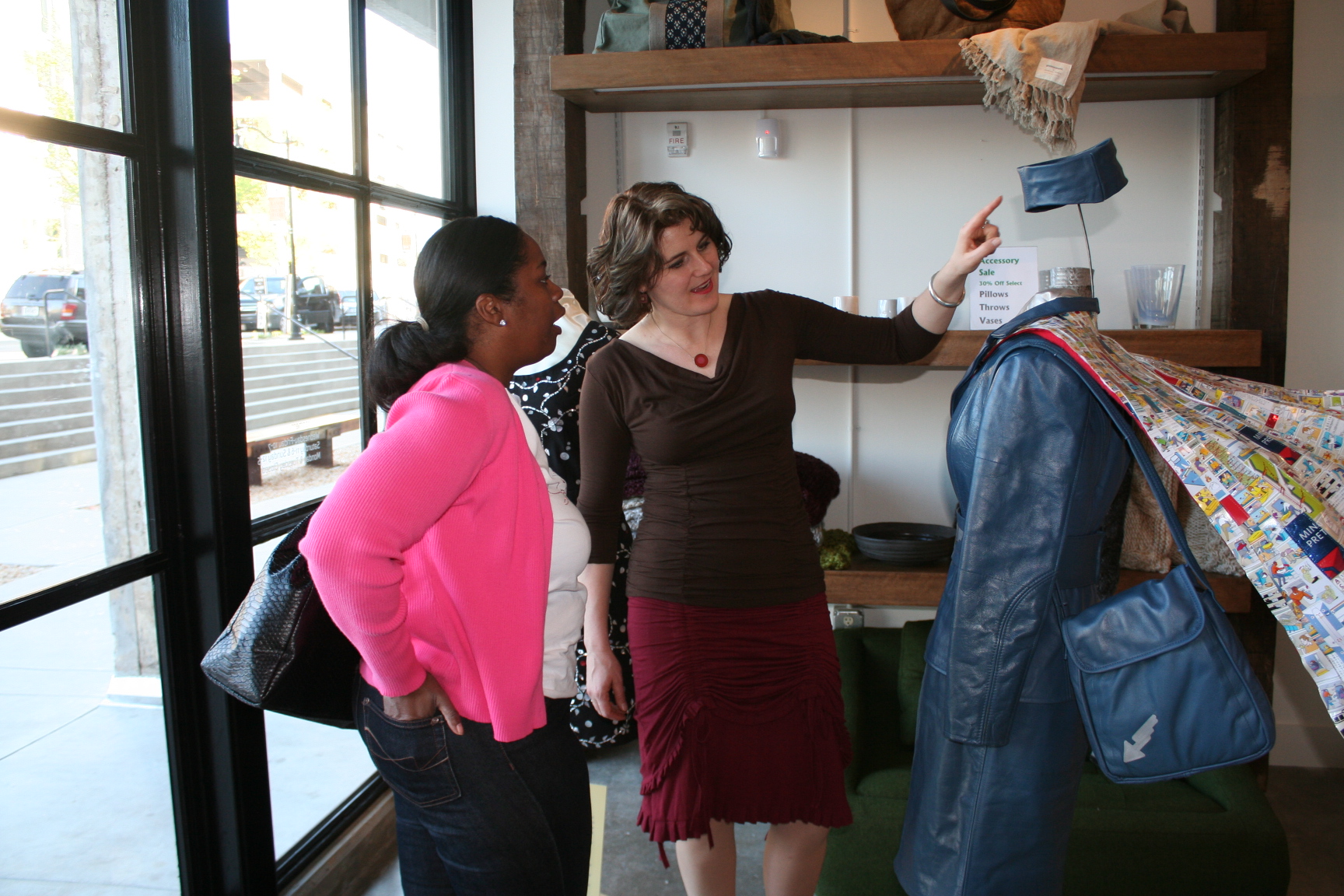
Interview at the Launch Party for the Atlanta International Exhibition.
View interview on-line.
Talking with Tami
 April 7, 2011
Trash Is The New Black
Yes you heard it right folks! The next time you go to throw away that pop can, or that old cd you might want to take a closer look at it and turn that trash in to something fashionable and feel good that you are helping the environment.
Read the full post.
Metro Mix Atlanta
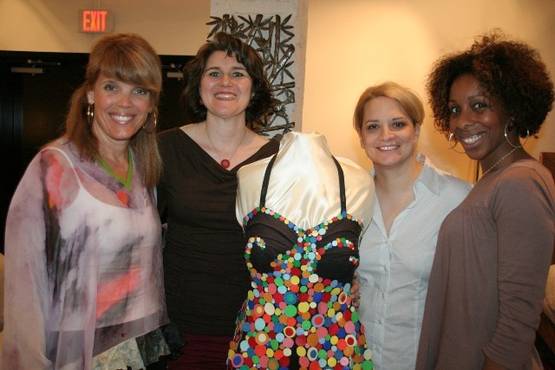 April 7, 2011
Nancy Judd launches her national eco-fashion exhibition at Environment Furniture in West Midtown
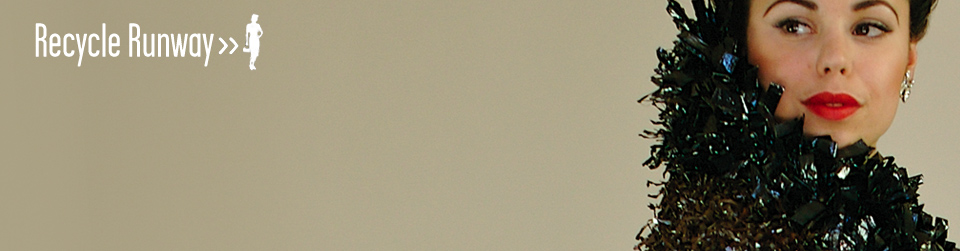
Recycle Runway exhibition, includes 18 eco-trash couture garments takes between 50-450 hours to create, and is the culmination of ingenious re-use. Pieces include faux fur jackets made with endless loops of cassette and video tape; a dress created of origami junk mail fans sewn together like fish scales; a dress inspired by jellyfish fashioned from plastic bags and an evening gown glittering with thousands of pieces of crushed glass.
View the full slide show of over 50 images.
USA Today
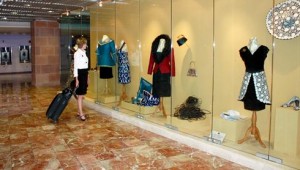 January 1, 2010
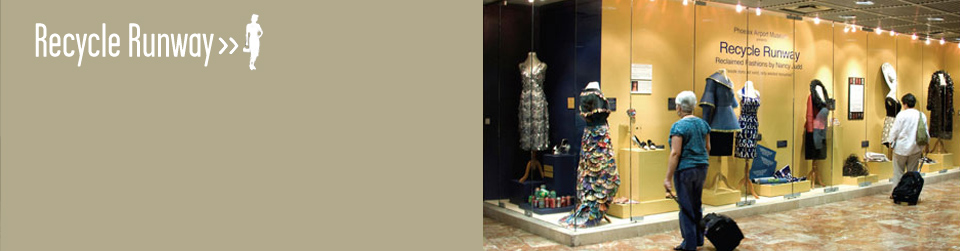
A traveler admires the Recycle Runway at Phoenix Sky Harbor. The Phoenix Airport Museum partnered with artist Nancy Judd on the exhibition of dresses created from materials that are often discarded.
