Eco Trash Couture
To View Project Details


Tireless Couture
Inner tube tires are reCYCLED into this chic atTIRE.
Inner tube tires from bicycles were cut into circles on and sewn onto the shirt and where cut into fringe and sewn to the bolero. Larger car tires create the undulating fabric on the skirt. The base of the shirt, bolero and skirt are all sewn from torn hotel sheets. The garment was completed in 2010 and took 175 hours to create.
This garment was created partially in public workshops as part of University Mall’s Scraple Hill Art Exhibition. Nancy Judd was asked to design and create a new Recycle Runway garment from inner tube tires to showcase the City’s commitment to sustainability by encouraging citizens to leave their cars at home and use the beautiful pedestrian and bicycle paths.
Commissioned by University Mall and Madison Marquette.
__________________________________________________
Ride your bike and leave the car at home!
Bicycling is one way that you can reduce your environmental impact. At this EPA website (click here) you can estimate your greenhouse gas emissions, including emissions from driving, using a personal emissions calculator. Once you have calculated your CO2 emissions from driving, learn about how to reduce your impact on the environment.
Source: Environmental Protection Agency
Faux Fur Coat
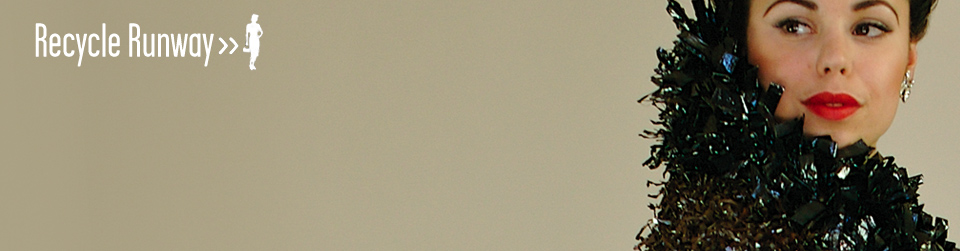
Obsolete cassette & video tape make an absolutely reeling garment.
Cassette tape was woven onto the fabric of a second-hand coat to create the looped texture. The collar and cuffs are accented with the larger discarded video tape. A thrift store prom dress was cut up and sewn for the lining of the coat. This cold weather garment took 310 hours to create. Created in 2005.
__________________________________________________
Recycle or donate old electronics, visit Earth911.com to learn where.
Electronics contain valuable materials such as glass, copper, aluminum, plastic and other components that can often be extracted and reused. In addition to valuable metals electronics often contain hazardous materials such as mercury. E-waste accounts for 70 percent of the overall toxic waste currently found in landfills. When placed in a landfill, even in small doses, these materials can contaminate soil as well as drinking water.
Source: Earth911.com
Pop Can Couture
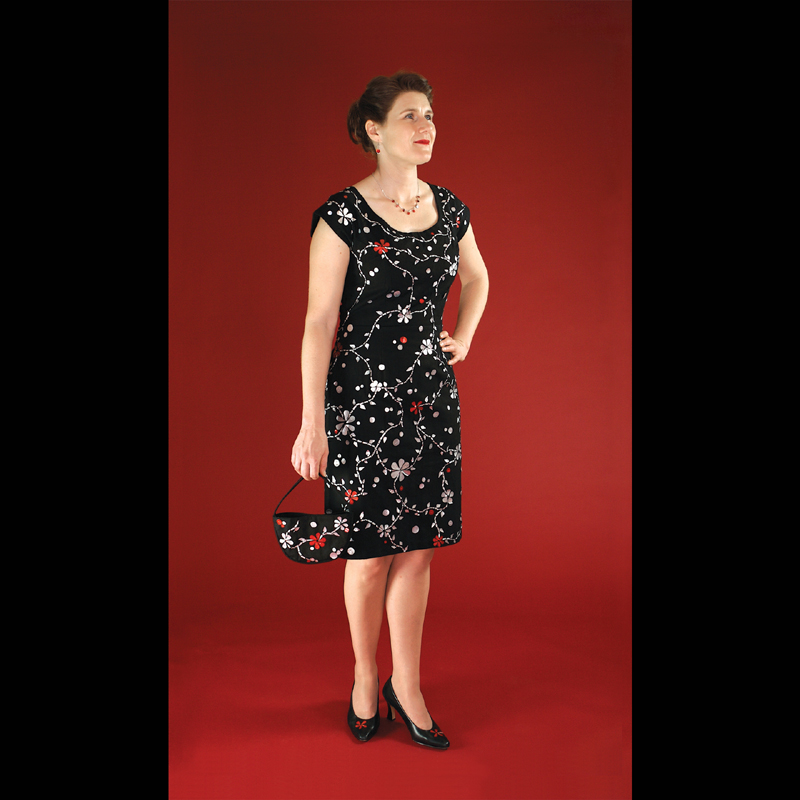
Aluminum Coke cans make this little black dress a classic!
Aluminum cans were hand-cut into leaves, petals and vines then hand-sewn onto the dress, purse and vintage shoes. The 1950s retro cocktail dress and purse were created from canvas scraps. Coke can aluminum earrings and necklace top off the ensemble. This fashion creation took 135 hours to make. Created in 2006.
Commissioned by the Coca Cola ® Company
__________________________________________________
Find out where to recycle aluminum cans in your community at: www.earth911.com.
Recycling 1 aluminum can saves enough energy to run a computer or TV for 3 hours, or a 100-watt bulb for 20 hours.
Every 3 months, Americans throw away enough aluminum to rebuild our entire fleet of commercial airplanes.
Sources: Environmental Protection Agency, Environmental Defense Fund
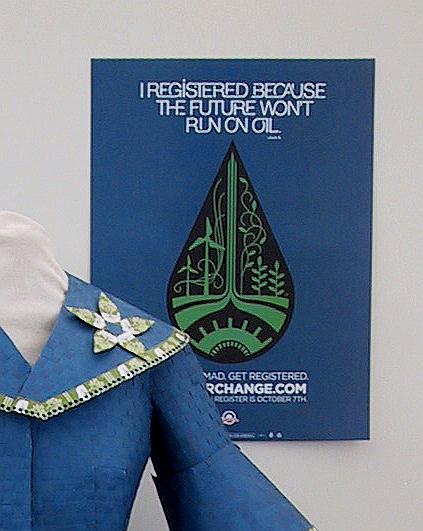
Obama Cocktail Dress
Surplus campaign yard signs make this dress politically correct!
Plastic campaign signs from the 2009 presidential election were collected for this party line dress. An old cotton sheet was repurposed for the lining of the dress. The plastic signs were cut into strips and attached to the lining in overlapping layers from bottom to top. This campaign dress was designed and fabricated in 50 hours. Created in 2009.
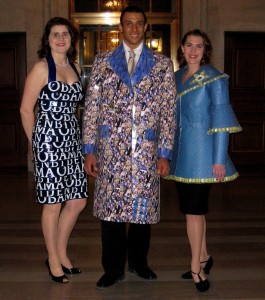
Change Couture Collection at the Green Inaugural Ball
The Obama Cocktail Dress is part of the Change Couture Collection which was showcased at numerous inaugural balls in Washington D.C. in 2009 for the presidential inauguration of Barack Obama.
Couture Plastique
Glamour is in the bag when you wear this elegant gown created from plastic film and bottles.
Plastic bottles are recycled into Eco-spun, the fabric in this gown. The eco-spun evening wear is covered with used plastic packaging film and accented with small circles cut from post-consumer plastic detergent bottles. The stole is knit from used clear plastic bags and lined with fabric from a second-hand white satin prom dress. This Oscar winner for best use of plastic film took 225 hours to create. Created in 2006.
Recycle plastic bags and film at home and at work. Visit www.plasticbagrecycling.org to learn how.
Any of the follow plastic that is dry, clean and free of paper labels can be recycled at your local grocery store:
- Grocery, produce, food storage bags (including cereal box liners)
- retail bags (hard plastic and string handles removed) newspaper and dry cleaning bags
- Retail wrap (e.g., furniture, electronics, napkin, and food containers)
- Plastic shipping envelopes (no bubble wrap/remove labels)
Source: plasticbagrecycling.org
Junk Mail Fan Dress
Discarded junk mail solicits a positive response when made into “fan-tastic” attire.
Catalogues, solicitations and newspaper ads were folded into fans and sewn onto the Spanish style dress. The skirt and bodice were constructed from canvas scraps. The thrift store shoes were covered with used postage stamps. This ensemble is topped off with a vintage mantilla embellished with junk-mail fans and origami peacock earrings. This creation took 200 hours. Created in 2000.
__________________________________________________
Cancel unwanted solicitations and catalogues!
Learn how to STOP JUNK MAIL!
More than 4 million tons of junk mail are produced yearly. Over 50 percent of this unsolicited mail ends up in landfills annually.
Recycle your unwanted mail and it will be made into paper towels, notebook paper, envelopes, copy paper, boxes, hydro-mulch, molded packing, and kitty litter. Producing paper from post-consumer paper uses 40% less energy than making paper from virgin wood pulp.
Source: US Environmental Protection Agency
Glass Evening Gown
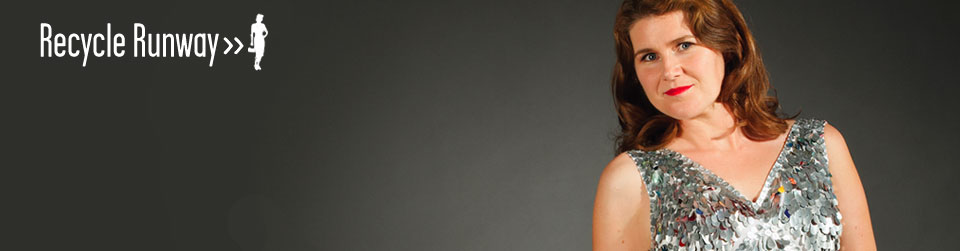
12,000 pieces of recycled crushed glass reflects sustainable elegance.
Crushed glass jars and bottles from the City of Albuquerque recycling program were glued to the gown and second-hand shoes. The 1930s style gown was made from upholstery fabric remnants. This couture fashion took 400 hours to create. Created in 2002.
Commissioned by the Glass Packaging Institute
__________________________________________________
Recycle glass jars & bottles forever!
Recycling glass reduces emissions and consumption of raw materials, extends the life of plant equipment, such as furnaces, and saves energy. Ceramics, porcelain, Pyrex, and dishware are the most destructive contaminants for glass recycling. Make sure they don’t get mixed in with your recycled glass bottles.
Recycle glass is primarily made into new bottles. It is also added to asphalt (glassphalt) to pave airport runways, parking aprons and taxiways; and added to paint that marks these areas. The reflective properties of these materials make it safer for airplane landings and take offs.
Source: Glass Packaging Institute
The Recycle Runway Collection
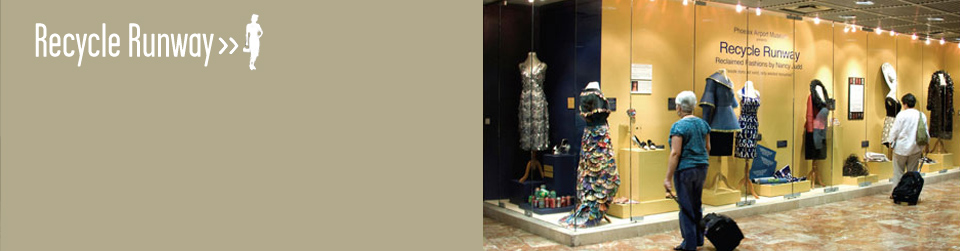
 Nancy Judd creates couture fashion sculptures made from trash (the Recycle Runway Collection) and displays her work in traveling exhibitions in high-traffic locations such as museums, airports, and shopping malls. Each of her sculptures takes between 100-650 hours to create, and her goal is that they will last for 100 years. Ms. Judd loves the challenge of making garbage elegant and inspiring people to look differently at waste and consider how we use our limited resources.
Click on any of the sustainable fashion designs to the left to learn more about each piece!
Commissions
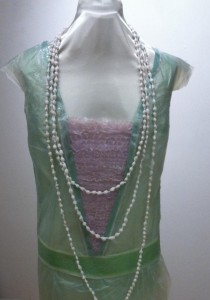
Mimi, created in Evanston, IL
Ms. Judd can create a site-specific piece for you or your organization. Nancy enjoys working in collaboration with her sponsors– asking the questions: “What are your waste materials?” and “What are the environmental issues that are pertinent to you or your region?” Using the answers to these questions Nancy designs site-specific commissions that are meaningful and pertinent to the sponsor. Including the community in the creation of the piece adds further depth to the projects. Click on “Mimi” (to the right) to read a blog post about such a project was created in 2011.
Praise from a garment sponsor:
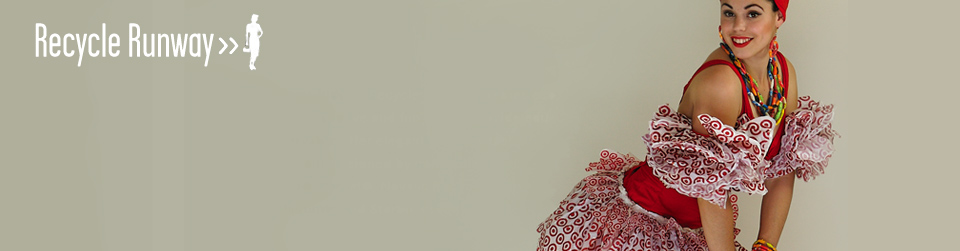
 Recycling Fiesta, sponsored by Target |
“Nancy contacted the local Target store to make the Target recycling dress, and the store team really got into it by coming up with lots of materials we were recycling and even some that we weren’t. That made the team think more about what they were throwing away. It was a great project and the impact of the dress is excellent.” Jim Bosch, Target |
Contact Nancy Judd at 505-577-9712 505-577-9712 or nancy@recyclerunway.com for more information about garment sponsorship.
Presentations and Speaking
Nancy Judd, a public speaker, has been giving inspiring eco-presentations across the country for the last ten years. From children in class rooms to docents in museums to TEDx audiences, Nancy shares photos of her elegant recycled fashions and talks about how we can each help to solve the environmental crisis. She demonstrates how our moment-to-moment decisions give us an opportunity to reduce our impact on the earth. Nancy speaks to children of all ages, and to adults at conferences, retreats, museums, press events, and any type of gathering.

- Nancy’s TEDxABQ Audience
Speaking topics include:
|
Praise for Nancy’s presentations:
“Nancy Judd of Recycle Runway is a great presenter. She is articulate, direct and clear in her communication style. Her program is a compelling one for youth, and her presentation draws in adults as well. I wholeheartedly recommend Nancy Judd and Recycle Runway.”
Aurelia Gomez, Director of Education
Museum of International Folk Art, Santa Fe , New Mexico
“Dear Ms. Judd,
Thank you for coming to my school all the way from Santa Fe. I learned a lot about recycling and I’ll try to help recycle and ask my parents to recycle and not litter. I hope I can make a difference. I hope that we can see your new dress at the airport and all the different places. Thank you for coming.”
Anita G.
Sundance Elementary School
Contact Nancy at 505-577-9712 or Nancy@RecycleRunway.com to discuss availability, topics and fees.
