Eco Trash Couture
To View Project Details


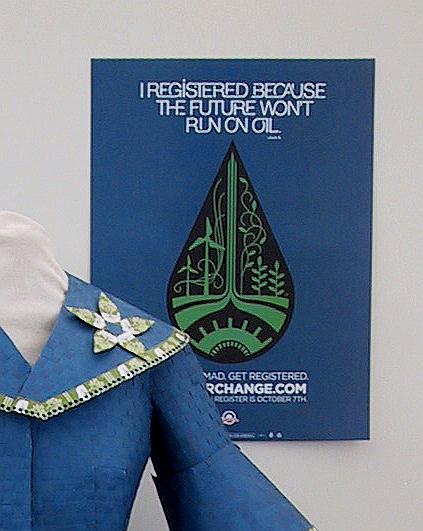
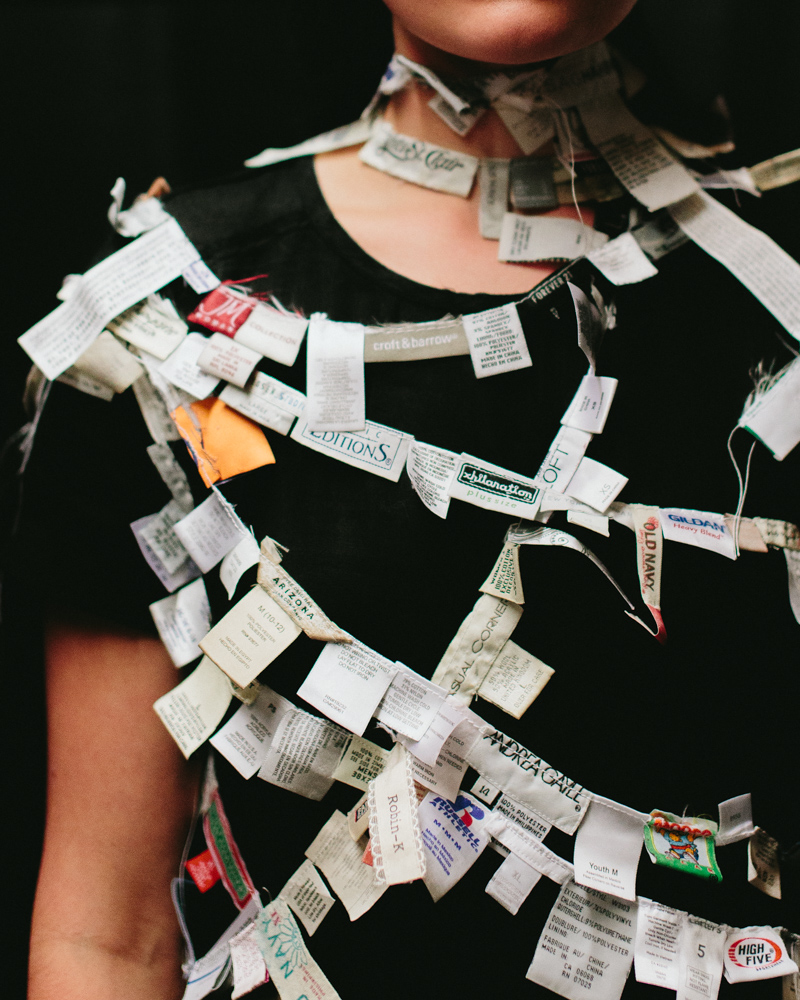
My Label Dress, Photo Harry Glazier
In this fifth and final post of this series I give some ideas about what YOU CAN DO to reduce the environmental and social impacts of the clothing you wear.
To recap my series, the first blog post, explained how through preparing new work for ECO FASHION WEEK, I took a deep dive into the environmental and social impacts of our clothing. The second post explored the world of fast fashion. My third post used the journey of a simple T-Shirt to see how the clothing industry is the second most polluting industry in the world after oil. The forth blog post shared my experience creating the ECO FASHION WEEK collection/performance piece that led to this blog series.
AN EASY 5 POINT PLAN TO GREEN YOUR WARDROBE
1. STOP buying new clothes!
I know this may seem kind of radical and maybe very difficult, but do you really NEED that new shirt or pair of shoes? If you count how many pieces of clothing you currently have in your closet and drawers, you will see that you could live for a long time without adding anything new to your wardrobe. Americans purchase an average of one new piece of clothing a week 1. If you fit into this average category but my solution feels farfetched, then at least try to reduce how much you buy. Here are some ways to do this:
- Wait a week before making any new purchase
- Clothing moratorium – try not buying new clothes for 1 or 2 weeks, or even 3 months
- Avoid the sale racks – most sale racks are designed to convince us to purchase something we don’t need
- Set a monthly spending limit – pick a low number and stick to it
When you do purchase new clothing try to:
- Support sustainable practices (for example organic cotton) and fair trade organizations. Check out these resources for environmental and ethical clothing:
– Project Just
– The Fashion Transparency Index 2016 [PDF]
– Remake
– KnowTheChain.org
– FairTradeUSA.org
– GoodGuide.com
- Buy durable and well made items that you know will last and avoid fast fashion
- Support local and small scale designers whose designs are locally made, meaning less environmental impact from shipping items halfway around the world to hang in your closet. Many small-scale designers are more ethical in their choices about fabrics, manufacturing, and worker’s rights. However, it is a good thing to investigate before assuming…
2. Repair what you already own
The idea of darning a sock feels as antiquated as the horse and buggy, but across the globe the art of repairing our clothing and other possessions is making a comeback. Fix-It-Fairs take place throughout the Portland area where I live. You can bring all kinds of items to these community events and citizens with sewing machines, tool kits and the “know-how” will fix your stuff.
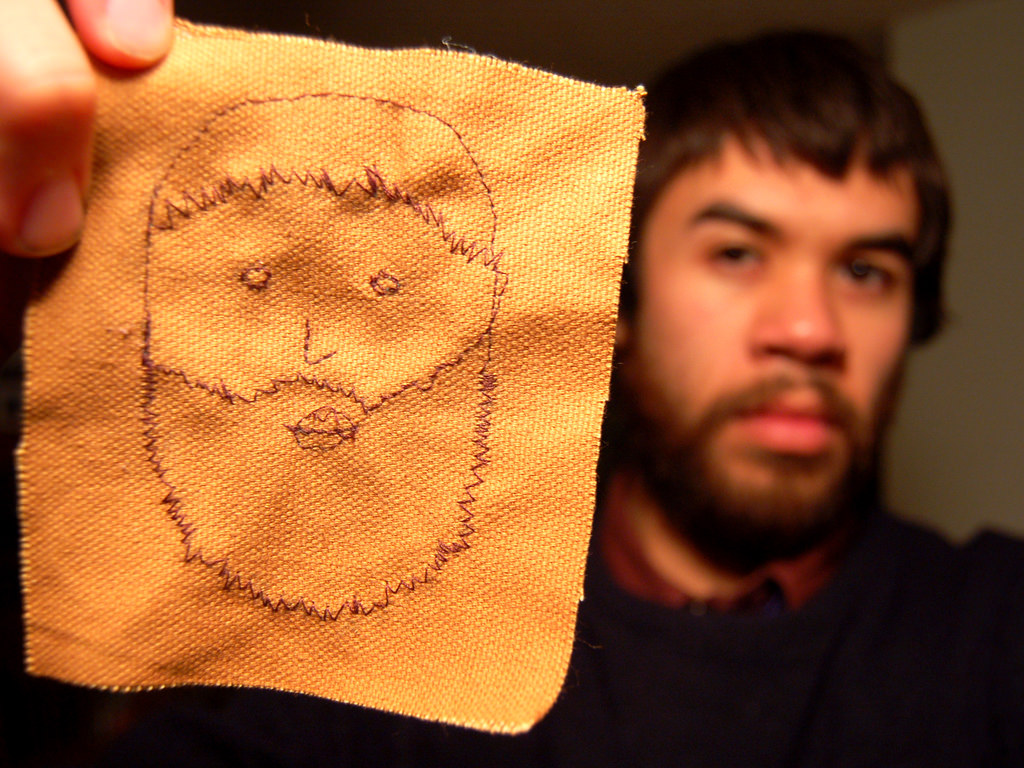
Photo: Ace Armstrong
If you don’t have a fix-it-fair in your area or want to learn to “do-it-yourself”, check out www.ifixit.com. This is a wiki-based site that teaches people how to fix almost anything. Anyone can create a repair manual for a device, and anyone can also edit the existing set of manuals to improve them. The site empowers individuals to share their technical knowledge with the rest of the world. They even have a clothing page https://www.ifixit.com/Device/Clothing that teaches you basics like sewing a button or mending a rip, to more complicated tasks like repairing a zipper.
REPAIR has been added to the “Reduce, Reuse, Recycle” phrase as an important way of reducing our waste. Additionally, I really appreciate the act of repairing because it respects the resources that went into creating that item.
Plus, repairing items can add character to your clothing! An interesting patch or, visible mending, can liven up a boring pair of pants, a shirt, or a coat!
3. Purchase second-hand clothes or go to clothing swaps
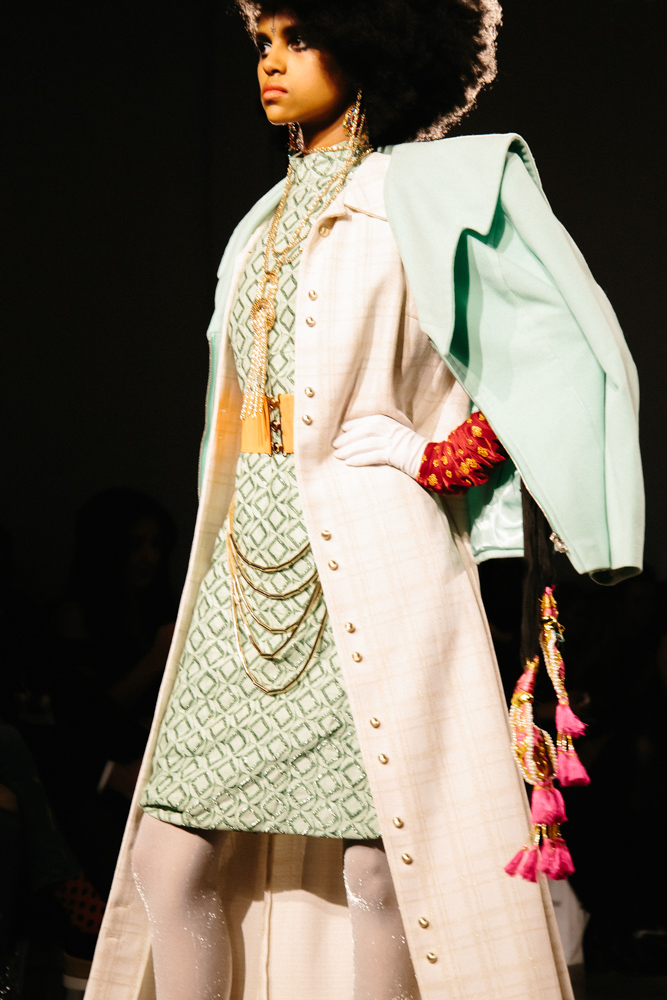
Stylist Jason Pillay, photo Harry Glazier
Have you noticed how many more thrift and consignment stores there are compared to just 15 years ago? According the Association of Resale Professionals the number of resale shops increases 7% every year.2 They attribute this to people being more interested in recycling/reuse, which could be true, and because people love shopping and getting bargains, which for good or bad we know is true. But I also think it has to do with the glut of clothing (and other STUFF) in our world because of fast fashion. Whatever the reason, purchasing gently used clothing instead of buying new clothes is very impactful in terms of reducing your carbon footprint!
And if you have never been to a clothing swap, they are an amazingly fun, and economical, way of getting rid of clothes you don’t wear anymore and picking up new items you need. My closet has many clothing swap scores!
Remember though to always give your unwanted clothing to thrift/consignment stores or take them to clothing swaps. In my first blog in this series I mentioned that the average American throws away 81lbs of clothes every year and the clothing recycling market is only capturing 15% of that, the rest goes into the landfill! Even ripped and torn clothing and fabric can be used for industrial rags and building insulation.
4. Caring for your clothing
I was surprised to learn that up to 80% of our clothing’s impact during its lifecycle comes while we wear them. This is because it takes a lot of energy to heat the water for washing and a lot energy to keep the dryer running. So there’s a huge opportunity to decrease your environmental footprint, by simply greening your laundry habits. The following list, borrowed from an article in TreeHugger, shows fabulous ways to do this:
- Wash your clothes only when needed
The Levi Strauss CEO Chip Bergh actually promotes NEVER washing your jeans! That might be a bit radical for most, but we can all wash our clothes far less than we do. Except for the obvious items that need washing after one wear, I use the sniff test on shirts and visually inspect my clothes to determine if they need to be washed yet. Washing clothing after one wear is definitely unnecessary in most cases and degrades the colors and the fabric! - Use green laundry detergent
Conventional detergents can contain ingredients that aren’t good for you, your clothes, or aquatic ecosystems where the dirty water we wash down the drain can end up. Phosphates in conventional laundry soaps can cause algal blooms that negatively affect ecosystems and marine life. To shop for more eco-friendly detergents, look for labels that indicate a product is readily biodegradable and phosphate-free, and made from plant- and vegetable-based ingredients (instead of petroleum-based), which means they’re healthier for the planet, from production to rinse cycle. - Wash in cold water
A whopping 90 percent of energy used for washing clothes goes to heating the water, costing you $100 or more every year. With more and more detergents specialized for cold-water washing, your whites will still get white without the hot (or warm) water. Next, be sure to wash only full loads of laundry, which ensures that your machine is operating at peak efficiency. If you can’t manage to fill ‘er up, the “load size selector option” (if you have one) ensures that smaller loads use less water. - Hang it out to dry
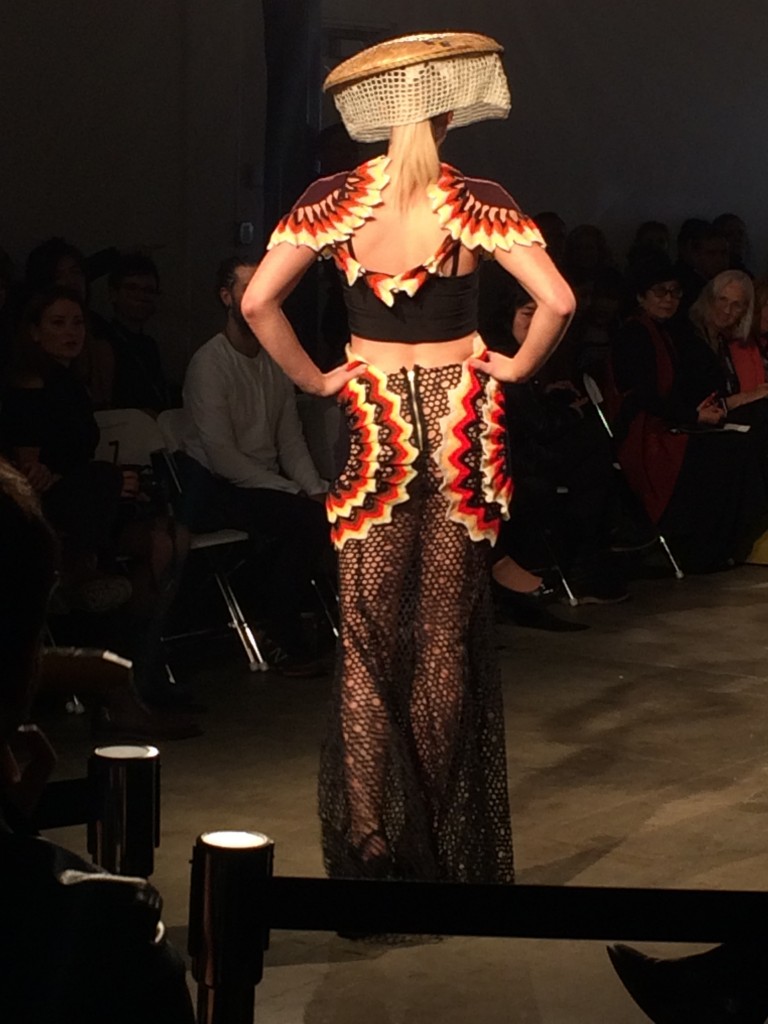
Designer Henry Wanjala, photo Nicole Morris
There are upward of 88 million dryers in the U.S., each emitting more than a ton of carbon dioxide per year. Because dryers uses so much energy, skipping it altogether can make a real difference. While some homeowners’ associations and municipalities oppose hanging clothes out to dry, the pro-line drying movement, headed up by Right to Dry, is putting up a good defense for your right to harvest free solar energy. Added bonus? Clothes last longer when you line dry because there’s less wear and tear than when you use the dryer.
- Maximize your dryer
Line-drying doesn’t have to be an all or nothing choice. If you’re sticking with the dryer for part (or all) of the time, cleaning the lint filter frequently will increase efficiency and shorten drying time. If your dryer has a moisture sensor, use it. This will automatically reduce the amount of drying time or shut off the machine when it senses that clothes are dry, which reduces wear and tear on your threads and saves lots of energy. A good moisture sensor is the best thing to look for if you’re shopping for a new clothes dryer. As of this year, Energy Star began to rate dryers, so make sure to check for their stamp of approval.
TreeHugger also recomends ditching the dryer sheets, which can be full of cancer-causing chemicals and neurotoxins such as toluene and styrene. They also break down organic fibers, shortening the life of your fabrics. Instead, toss a sachet of dried organic lavender in the dryer for a healthy, sweet scent. - Don’t iron if you don’t have to
Not only is ironing a tedious chore, it also consumes energy and can deteriorates fabric. Still, no self-respecting environmentalist wants to look ruffled, right? To avoid looking haggard, simply hang clothes up immediately after the wash cycle is complete. The water still in them will work with gravity to pull most wrinkles out. For wrinkle-prone clothing such as linen, cut the final spin cycle, which will leave even more water in the garments, creating yet more pull. Then fold dry clothes where you want creases to be, and place them under other clothes in your dresser, which will further help to press them. - Don’t bother with dry cleaning
Conventional dry cleaning is a decidedly un-green process; most businesses use the chemical perchloroethylene (also called “perc”), which research studies have shown may be dangerous to our health. Exposure to this chemical has been linked to increased risks of bladder, esophageal, and cervical cancer; eye, nose, throat and skin irritation; and reduced fertility; among other effects. Yikes!
Luckily, there are alternatives. For starters, if you want to eliminate dry cleaning from your life, start by buying clothes that don’t require it–it’s wise to read labels before making purchases. Also, recognize that many delicates and other garments, including those made from cashmere and lambs’ wool, can be safely and easily hand washed. 3
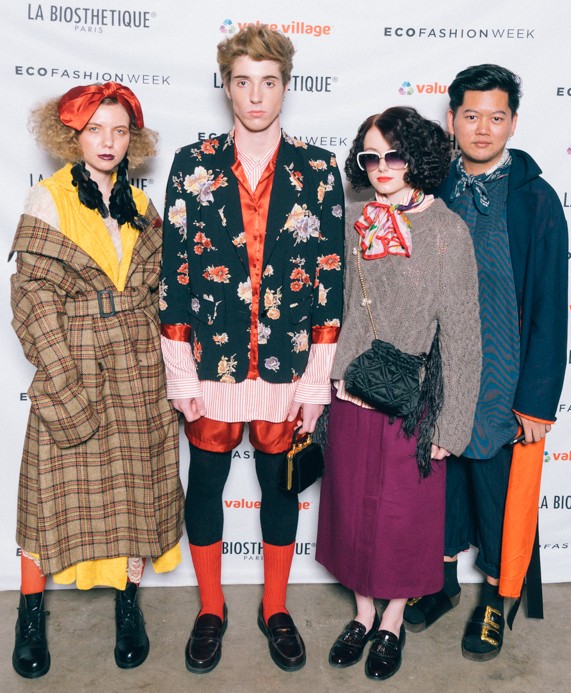
Stylist Jerome Insorio, photo Domnic Arenas
5. Reclaim fashion as a form of personal creativity!
Lastly let me just say that I hate to be manipulated and the fashion industry, by definition, is all about dictating what we should and should not wear any given year. They guide our purchasing decisions to benefit their bottom line— not to benefit the consumer, the workers, or the planet and that MAKES ME MAD!
If you enjoy fashion, then I encourage you to create your own sense of style. Though I don’t go clothing shopping very often anymore, when I do I love shopping at thrift stores, I find that it encourages creative dressing. You can discover interesting items and combine them in unusual ways that reflect your personality and lifestyle! I have included photos throughout this blog post from other ECO FASHION WEEK stylists and designers that exemplify creative fashion play at its best.
We have come to the end of this long look at the impacts of the clothing that we wear. And as you probably realize, many of these same facts hold true for most items in our lives, not just our clothing. From basketballs to frying pans, most of the things we buy are made outside of the country by people working in unfair conditions that we would NEVER accept for ourselves or our family. And they are made from mined and manufactured materials that are harmful to the planet, that use a lot of energy to make, fuel to transport and that pollute the air, water and soil in the process. Reducing our consumption, and reusing EVERYTHING in our life is essential!
I would love to hear what was most useful in this series to you, and how you might change your actions based upon what you have read here or elsewhere. You can respond below or send me a private message at Nancy@RecycleRunway.com. And thanks for taking this journey with me!
1Cline, Elizabeth L. Overdressed: The Shockingly High Cost of Cheap Fashion. Reprint edition. Portfolio, 2013. Print.
2 NARTS. “Industry Statistics & Trends.” Professional Trade Association. NARTS: The Association of Resale Professionals. N.p., 2017. Web. 9 Feb. 2017. http://www.narts.org/i4a/pages/index.cfm?pageid=3285
3 TreeHugger. “11 Ways to Green your Laundry.” Environmental. Team Treehugger HTGG. N.p., 10 July, 2014. Web. 9 Feb. 2017. http://www.treehugger.com/htgg/how-to-go-green-laundry.html
This series was co-researched and co-written with Nicole Morris.
The third in a series of blog posts about the true costs of the clothing we wear.
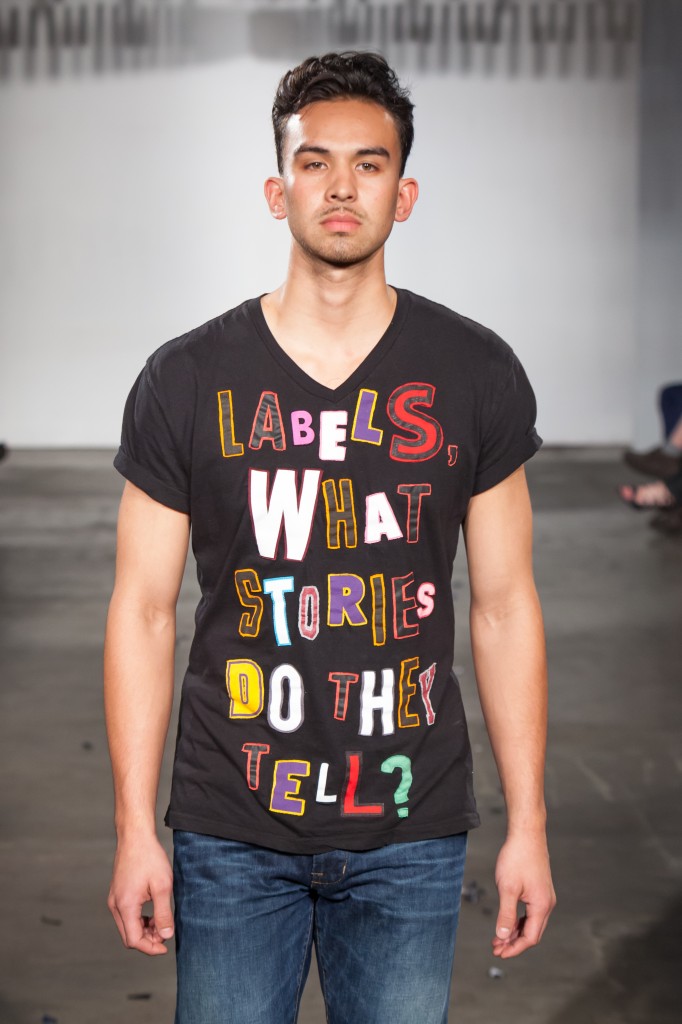
A T-shirt from my ECO FASHION WEEK collection.
In my first post, I explained that through preparing new work for ECO FASHION WEEK, I took a deep dive into the environmental and social impacts of our clothing. In the second post we explored the world of fast fashion. Below I will use the journey of a simple T-shirt to underscore how the clothing industry is the second most polluting industry in the world after oil.
Besides packing a landfill, other reasons the fashion industry is so polluting become clear when you think about the cradle-to-grave journey of a simple T-shirt. As we shall see, there are loads of instances where toxicity is released into the environment, populations of other countries are exploited and human dignity is compromised.
Most T-shirts are made of a blend of cotton and polyester.
- Cotton uses more pesticides and fertilizers than most crops and this impacts the water, soil, air, AND people who grow and pick the cotton. Some of the largest cotton fields in the world in Texas and India have significantly higher than normal rates of brain tumors and children born with physical and mental challenges.1
- Polyester is made from petroleum and the pollution from the extraction, refinement, transportation, and use of petroleum defines the first most polluting industry in the world. From oil spills, to water contamination, to air and soil toxification, to increased methane release we see the effects of pollution in everything the oil industry touches. Additionally, creating fabric from petroleum is very energy and water intensive, from the extraction of the crude oil to the weaving of the materials from polymers.2 And the fabric particles (think, the lint in your dryer) never completely break down and instead build up in the environment. These are showing up in municipal waste water treatment plants and waterways everywhere, often referred to as contaminants of emerging concern or microplastics.
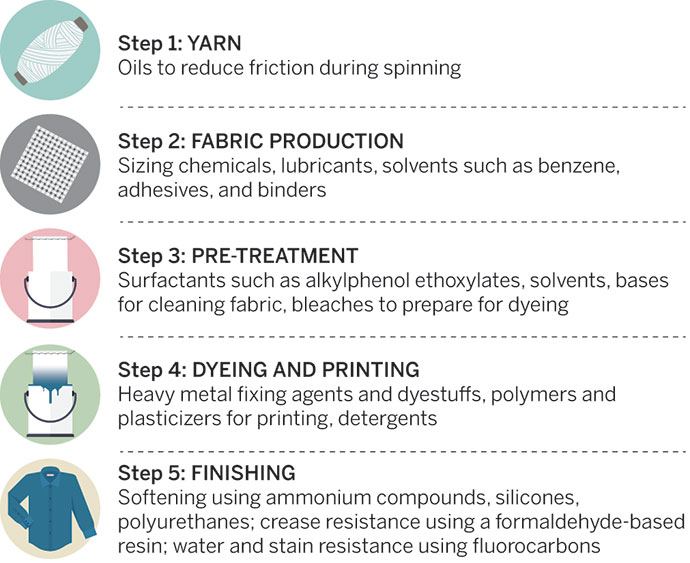
Graphic of chemicals used in each step of clothing manufacturing, from Chemical & Engineering News.3
Next our fabric needs to be bleached and dyed. Dyes and dye effluent contain highly toxic materials like ammonia, heavy metals, and alkali salts such as caustic soda, caustic potash, and lye. Many of the chemicals that make dye are carcinogenic and regulated by the EPA due to their production of toxic waste. This is another VERY polluting process that uses and pollutes tremendous amounts of water impacting people’s water sources across the globe. Tirupur, India, a city with the population with over 444,000 people, is known for its dyeing and bleaching industry. Water pollution has gotten so bad there that neither citizens, nor local farmers can use it.4 And here’s a figure for water usage in the dyeing process; in order to produce enough dyed fabric for one ordinary sofa, you need 500 gallons of water.5
Our T-shirt now needs to be cut and sewn. Clothing production in the United States has fallen dramatically over the years as companies have found people across the globe willing to work for much less money, in often unfair and unsafe conditions. According to a public broadcasting report “The Lowdown,” produced by KQED of Northern California, we went from 95% of American garments made in the USA during the 1960’s to 2% made in the USA as of 2013.6 Hundreds of people have been killed in fires and unsafe working conditions so that we can have the satisfaction of buying inexpensive clothes and getting “good deals.” Bangladesh saw one of its factories, Rana Plaza, collapse during April 2013, where over 1,100 workers were killed. Prior to that in 2012 over 100 employees were killed in a fire at the Tazreen factory, also in Bangladesh. One of the reasons that foreign manufacturers are able to make our clothing so cheaply is their lack of regulation in many portions of the process. Many of these manufacturers employ children, and do not worry about the sanitation nor even safety of their workplaces. And they can be found engaging in both forced repression of unions as well as simple wage theft.
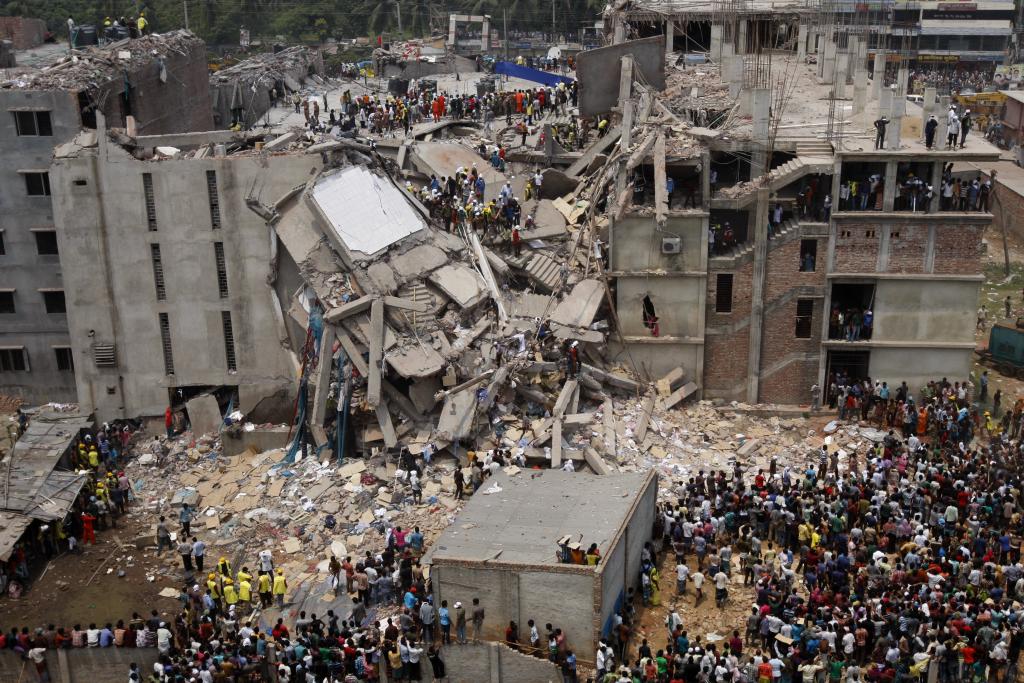
Photo by Jaber Al Nahian, Dhaka Savar Building Collapse (CC BY-SA 2.0), https://www.flickr.com/photos/rijans/8731789941
Lastly, the entire business of clothing and textile manufacturing uses an enormous amount of energy and fuel. This process of growing/mining; processing/weaving; bleaching/dying; sewing; selling/buying; and wearing our clothing rarely happens in one place or region. Each stage requires transportation. Though global supply chains have the promise of efficiency to meet manufacturer and vendor deadlines without adding extra cost, they are transported by shipping containers on rail, truck, and ships using the worst of today’s polluting fossil fuels. Increases in transport by ships that consume fuel by tons per hour, coupled with their use of lower grade bunker fuel have increased the negative health effects to coastal and inland populations.
Beyond all this, here is a brief list of startling facts:
- Making polyester uses 70 million gallons of oil each year.
- To manufacture rayon and other fibers from cellulose, we harvest over 70 million trees a year.
- 24% and 11% of insecticides and pesticides global manufacturing, respectively, is used to produce the world’s cotton.
- Textiles use ¼ of the world’s chemicals.7
- It takes 3,886 MJ (megajoules) of energy to produce enough nylon fabric to cover a couch (about 25 yards).8
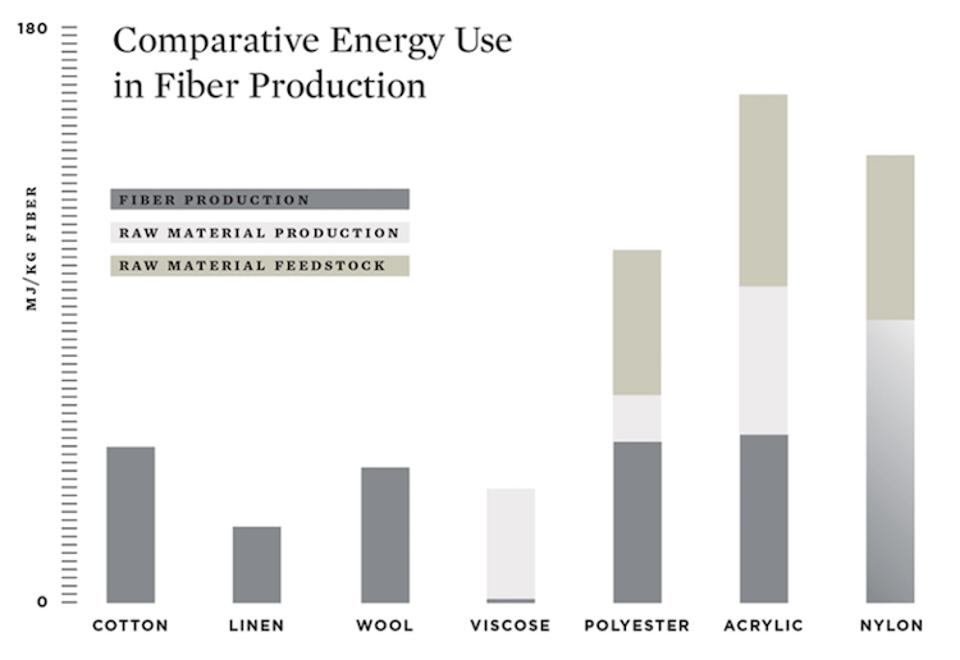
Graphic “Comparative Energy Use in Fiber Production,” from Forbes. 9
This is the quick story of a simple T-Shirt, imagine the process for more complicated items like shoes, rain coats, dresses with sequins, etc. Even clothing purchased from more “reputable” brands and stores are mostly created from the same problematic materials and in overseas factories that require a great deal of transportation. NOW, perhaps you can see why the clothing industry is the second most polluting industry in the world!
In my next blog post, I will talk about how all this information informed the collection and performance piece I created for ECO FASHION WEEK, and in my last blog post we will explore what we can do as consumers to reduce the negative impacts of the clothing we purchase and wear.
1 Morgan, Andrew. The True Cost | A Documentary Film. bullfrogfilms, 2015. SDH Captioned. http://truecostmovie.com/
2 Grossman, Patty, and Van Dusen, Leigh Anne. “Estimating the Carbon Footprint of a Fabric.” WordPress. O ECOTEXTILES. N.p., 19 Jan. 2011. Web. 21 Dec. 2016. https://oecotextiles.wordpress.com/2011/01/19/estimating-the-carbon-footprint-of-a-fabric/
3 Scott, Alex. “Cutting Out Textile Pollution.” Chemical & Engineering News 19 Oct. 2015. Web. 17 Jan. 2017. http://cen.acs.org/articles/93/i41/Cutting-Textile-Pollution.html
4 Rajshekhar, M. “Can the Courts Save India’s Rivers from Pollution? Tirupur Shows the Answer Is No.” News. Scroll.in. N.p., 30 Aug. 2016. Web. 21 Dec. 2016. http://scroll.in/article/812470/can-the-courts-save-indias-rivers-from-pollution-tirupur-shows-the-answer-is-no
5 Grossman, Patty, and Leigh Anne Van Dusen. “Textiles and Water Use.” WordPress. O ECOTEXTILES. N.p., 24 Feb. 2010. Web. 21 Dec. 2016. https://oecotextiles.wordpress.com/2010/02/24/textiles-and-water-use/
6 Vatz, Stephanie. “Why America Stopped Making Its Own Clothes.” Public Broadcasting. The Lowdown. N.p., 24 May 2013. Web. 18 Jan. 2017. http://ww2.kqed.org/lowdown/2013/05/24/madeinamerica/
7 Conca, James. “Making Climate Change Fashionable – The Garment Industry Takes On Global Warming.” Publication. Forbes. N.p., 3 Dec. 2015. Web. 19 Jan. 2017. http://www.forbes.com/sites/jamesconca/2015/12/03/making-climate-change-fashionable-the-garment-industry-takes-on-global-warming/#2c2c25a9778a
8 Grossman, Patty, and Leigh Anne Van Dusen. “What Is the Energy Profile of the Textile Industry?” WordPress. O ECOTEXTILES. N.p., 16 June 2009. Web. 19 Jan. 2017. https://oecotextiles.wordpress.com/2009/06/16/what-is-the-energy-profile-of-the-textile-industry/
9 Conca, James. “Making Climate Change Fashionable – The Garment Industry Takes On Global Warming.” Publication. Forbes. N.p., 3 Dec. 2015. Web. 19 Jan. 2017. http://www.forbes.com/sites/jamesconca/2015/12/03/making-climate-change-fashionable-the-garment-industry-takes-on-global-warming/#2c2c25a9778a
This series was co-researched and co-written with Nicole Morris.
Photo Credits: Runway photo by Peter Jensen.
PDX Weather Advisory, 2016
Celebrating Sustainability (and rainy weather) at the Portland Airport!
The Port of Portland which runs the Portland International Airport commissioned me to create this ensemble. Each part of the rain gear outfit (a nod to Portland’s notoriously wet climate) represents one of the Port’s five sustainability programs, and is made from waste materials upcycled from each of those programs.
You can learn more about what each component is made of and the process of creating the piece in this blog post.
The Trash Man’s Suit, 2016
The Trash Suit was commissioned by Rob Greenfield during an “eco-stunt”, where he wore his trash for 30 days! It is made of clear plastic film that was sewn onto a pair of military pants and a coat supported by an old back pack frame. See photos of the suit filling up over the month in Rob’s “Trash Me Time Line”.
Read more about my experience making the suit and working with Rob in this blog post.
Watch a video Rob’s team made about my process creating the Trash Suit.
Pacifica, 2016
A Celebration of the Seashore!
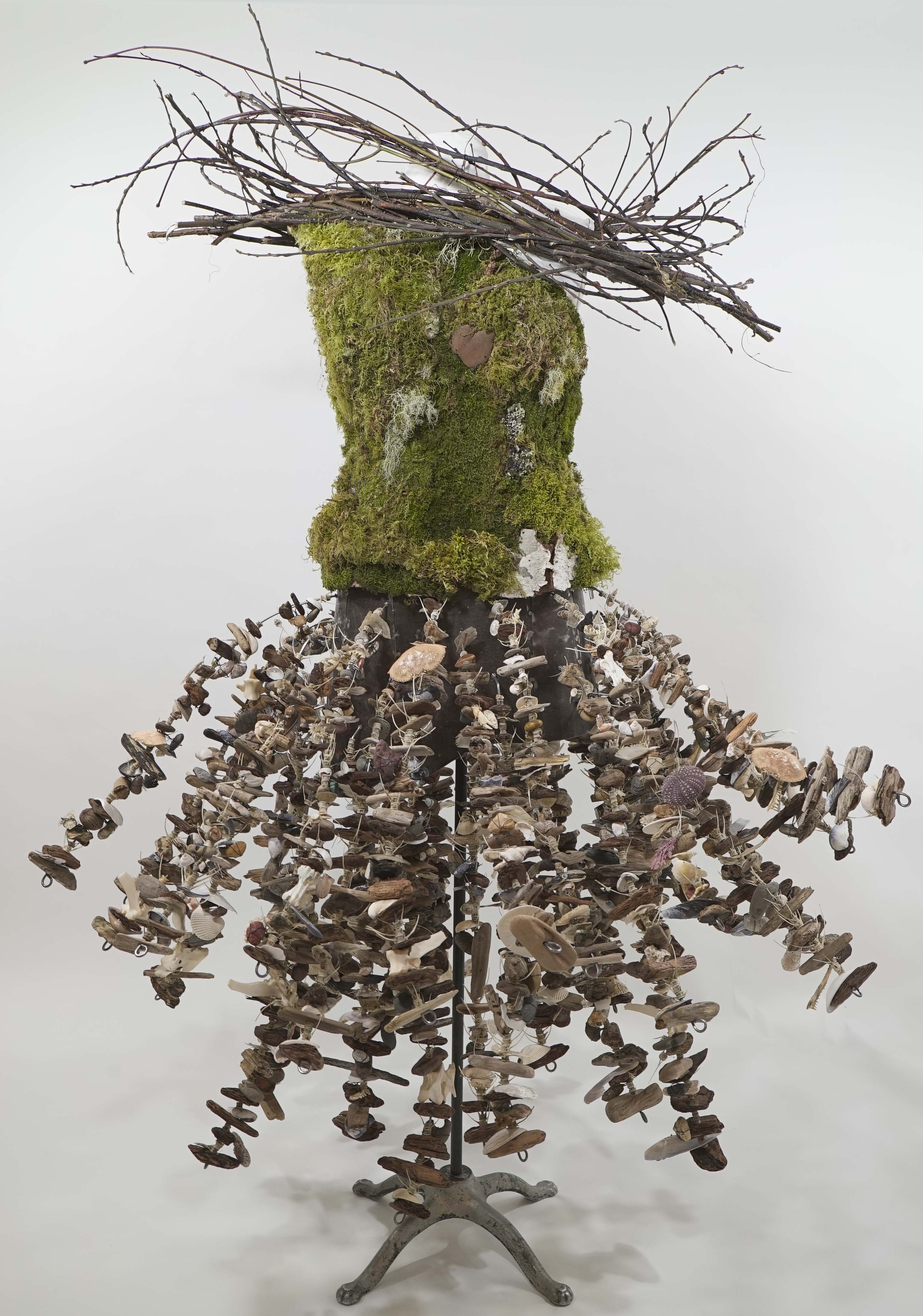
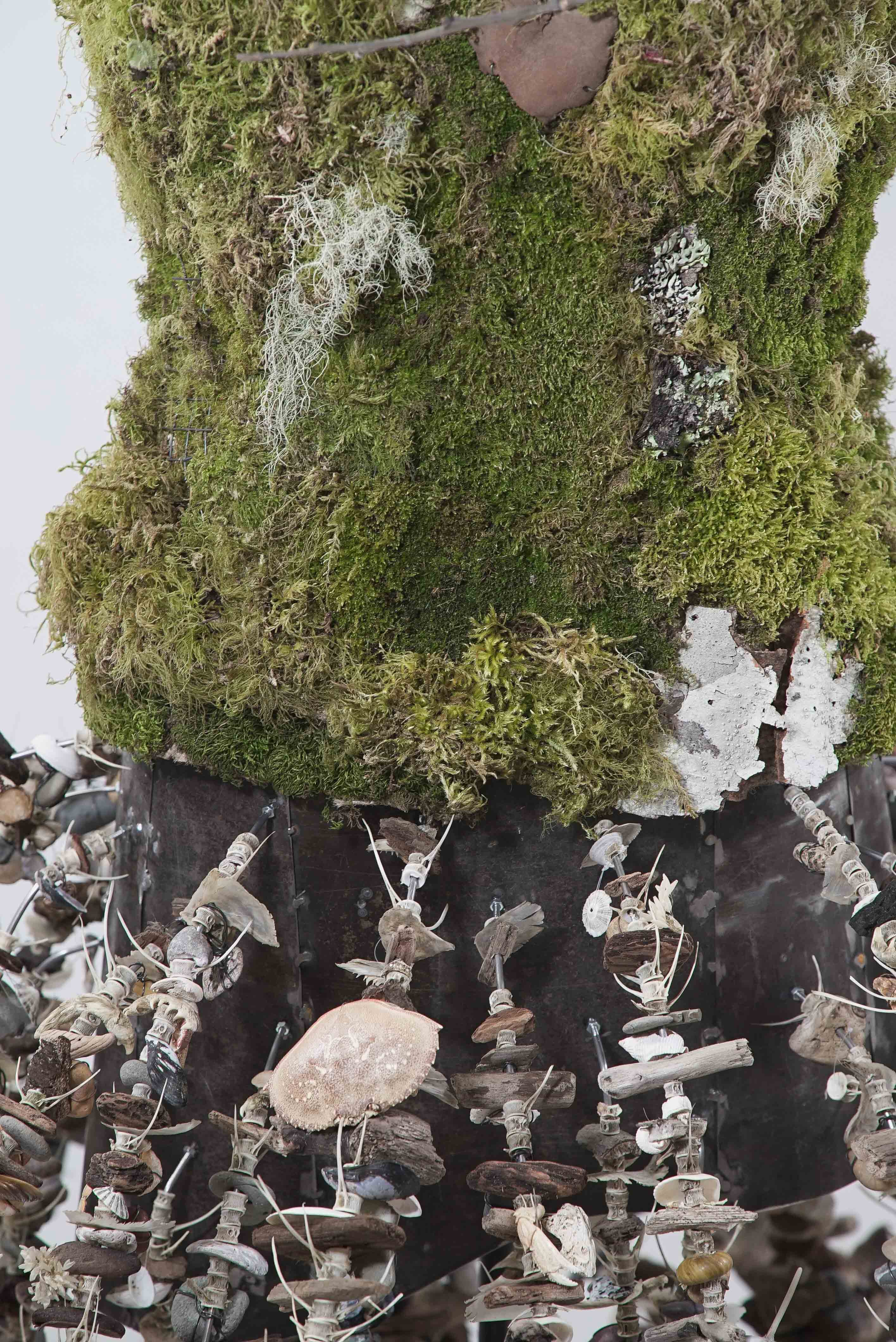
This sculpture was created to celebrate the 50 year anniversary of Cascade Head Preserve on the Oregon Coast. It is made of natural items found along the seashore such as shells, driftwood, rocks, salmon teeth, fins and vertebrae that are strung onto wire and secured to a metal skirt made from upcycled baking sheets. The bodice is made from moss, lichens and bark sewn to burlap with old fishing line.
Pacifica was commissioned by the Nature Conservancy in Oregon.
You can read details about the creation of Pacifica in this blog post.
Bella, 2016
A Bride on a Mission!
This sculpture is made from discarded plastic Tyvek® (used in sterilization pouches and bags for the medical industry) that was cut into strips and sewn to the dress. The flowers were made primarily by people attending medical industry conferences across the US in 2016. Bella’s goal is to bring awareness to the recyclablity of Tyvek®, and inspire the creation of recycling programs for this plastic film.
Commissioned by Beacon Converters in 2016.
Read this blog post to learn more about the creation and mission of Bella.
The video above was recently released by the Huffington Post about the work I do. It is part of an excellent series they are doing called RECLAIM: REDUCING THE WORLD OF WASTE . In this series, they cover positive stories across the globe ranging from smog vacuums in China; to Rob Greenfield’s story of wearing his trash for a month; to a story called, “You Make Reckless Decisions When You Shop After Work.”
The Huffington Post piece focused on my use of fashion as a means to engage people in conversations about what is happening to our planet. As I prepare to dive into the world of fashion at Eco Fashion Week in Seattle this week, this is a perfect focus.
At EFW, I’ll be participating in two ways but I’m going to talk about the second event first. On Friday November 4th I will be part of a panel, during Session 2, in a day-long event called the “Collective Conversation” which explores how to make our clothing more sustainable. I will discuss this in further detail later this month in a blog post covering what I learn this week. For now I want to share with you one staggering piece of information I discovered recently:
FASHION IS THE SECOND MOST POLLUTING INDUSTRY AFTER OIL & GAS!
At first this seemed unlikely to me, especially considering industries such as nuclear energy and weapons. But as I thought about it more I realized that each of the 7 billion people on this planet wear cloths and many have copious amounts of them! The price of fashion is huge when we consider the varied activities that take place around clothing, for example:
- the pesticides used to grow cotton;
- the petroleum products used to make nylon and polyester;
- the staggering amounts of water that are both used and polluted in the garment industry (it takes over 700 gallons of water to make ONE T-SHIRT!);
- the overwhelming energy requirements to power the massive facilities where our clothes are dyed, bleached, woven, cut, and sewn;
- the energy used on washing and drying clothes;
- all of the packaging used to protect the materials and finished garments as they move from one place to another before they end up in our closets;
- the fuel used and pollution created to transport clothes across the world and back again;
- the waste created while we wear clothes and later dispose of them (the average American throws away 81 lbs of textiles a year!)
- And then of course there are the often unfair and unsafe working conditions for the millions of people in the garment industry.
When you consider the many and far reaching arms of the fashion industry, you can begin to understand why it holds this regrettable distinction!
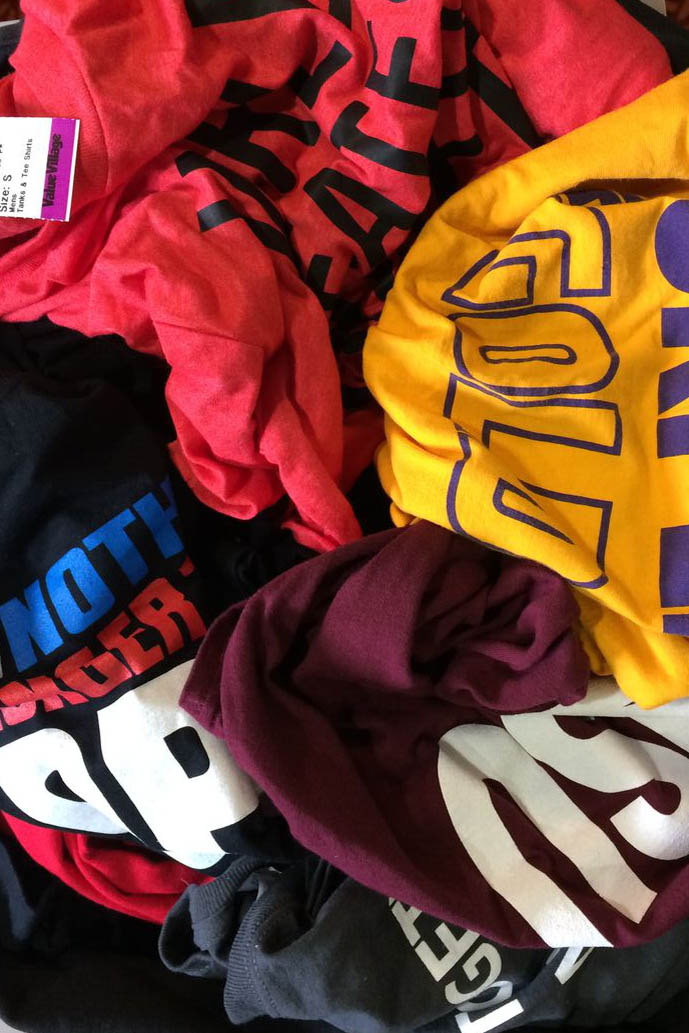
The first event I will present in is a segment called RUNWAY REIMAGINED on Wednesday November 3rd where I will be unveiling a visual exploration of the price of fashion on the runway. (If you live in Seattle, please come! Details can be found here: ) For the show, I have created three garments that raise questions about the labels in our clothing and the stories they tell us about the environmental and social costs of what we wear. I consider this work to be performance art, using the fashion stage as my “canvas”. It’s new territory for me and I’m very excited!
Below are photos of the materials I am working with for this collection. After the garments are unveiled at Eco Fashion Week, I will send out photos and video of the full garments and collection. Stay tuned!
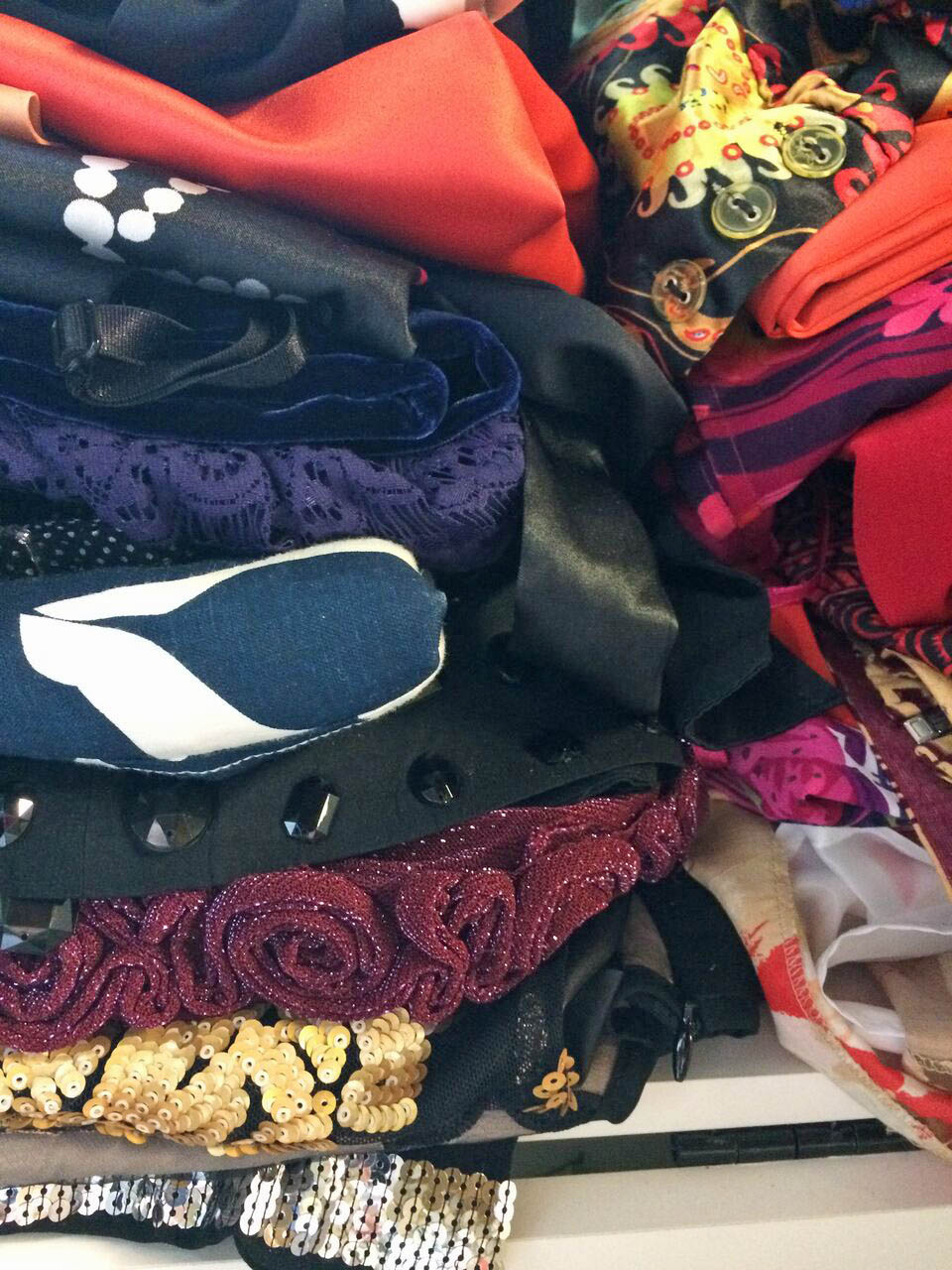 |
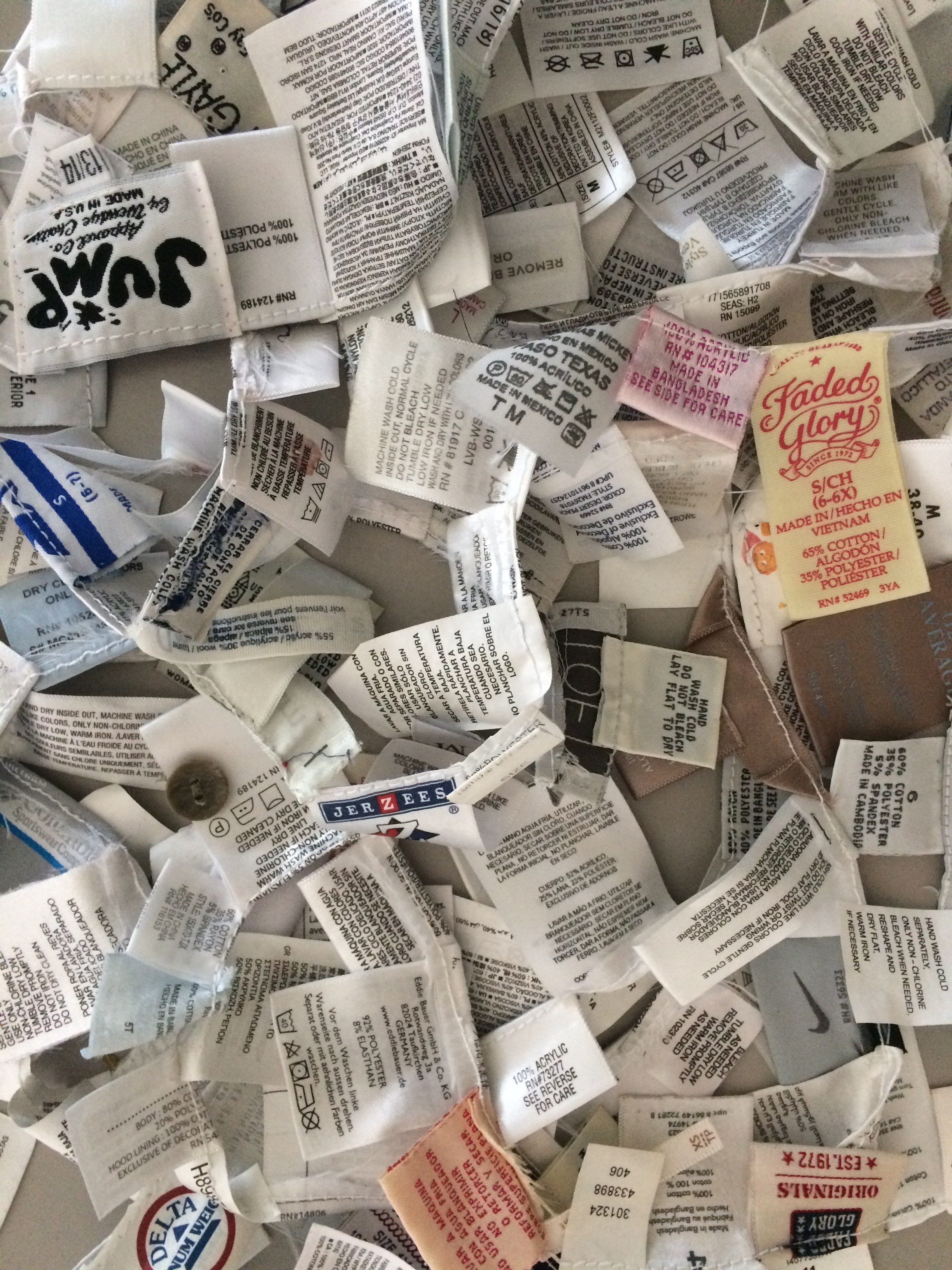 |
 |

Cascade Head Preserve and the Salmon River Estuary
I love most that first breathe when I step out of the car after a two-hour drive from Portland, OR and inhale the rich smells of Cascade Head. It’s a mixture of the salty ocean with the loamy earth. It is specific to this area where the sea meets the land at the mouth of the Salmon River Estuary. As a child I was allowed to roam this River and the nearby forests at my leisure, spending hundreds of hours quietly watching: noticing the green moss, the green ferns, the green leaves, the green pine trees—infinite shades of green teaming with life. Burying my nose in a mossy tree limb made me feel alive and connected to the natural world. It still does!
Pacifica
Pacifica is the most personal sculpture I have created thus far. It tells the story of my history, my inspirations, my family, and one of the most powerful forces on earth: the ocean. This sculpture was commissioned by The Nature Conservancy in Oregon (TNC) which is celebrating the 50-year anniversary of Cascade Head, one of their prized preserves and a place central to my being. I first came to this magical area as a child in the 1970s when my parents purchased a small piece of property below the majestic Cascade Head which is on the Oregon coast just north of Lincoln City. They settled on a steep triangle of land thick with elderberry bushes and sword ferns over-looking the Salmon River Estuary. Here my Mom and step-father John (who is a painter, sculpture and builder) designed and built our family a beautiful home. John took over 20 years to construct every inch himself down to each drawer and banister. It is truly the gift of a lifetime as my siblings, nieces, nephews, our spouses, friends, and I have returned again and again for over 40 years!
The creation of Pacifica began at Cascade Head on a rainy February day when I hiked with TNC’s Debbie Pickering, Mitch Maxson and Julia Amato, along with cinematographer Brady Holden, up to the Head and walked along the Estuary to collect materials. Debbie, TNC’s Oregon Coast Ecologist, shared information with us about the ecology of the area that was completely new to me despite my years of walking these paths. For example she taught us how to distinguish different conifer trees from one another, and which plants are edible and used for medicinal purposes.
Brady Holden’s video about Pacifica won two awards at the McMinnville Short Film Festival in October.
Detail of Pacifica
Unlike my other garments, Pacifica is made primarily of natural objects: shells, wood, rocks, bones and feathers are strung on wire and connected to an upcycled steel skirt; the living bodice is made from moss, branches and pine cones sewn to burlap with reclaimed fishing wire. Debbie determined which items we could include on the sculpture, for example we had to be careful not to collect anything with living barnacles attached to it so as not to inadvertently kill any little creatures in creating the piece. Additionally, Debbie and her husband Dave spent many hours along the sea shore gathering the majority of materials that make up the skirt… I am very appreciative of her special contribution to the creation of Pacifica!
For me, this sculpture is about the connection of the ocean to the land. As a child I was moved by the connections and transitions I witnessed at Cascade Head where the river meets the ocean, the ocean meets the land, and that incredible moment when you break out of the sheltered forest into the open grasslands of the Head. There before you stretches the Pacific Ocean out to our neighbors in Asia and, as you turn around, you can see miles of the Salmon River forever flowing, flowing, flowing. Below our house, sitting on a rock in the estuary I watched the waves crashing, splashing, misting, and foaming. Other times the ocean arrives in the estuary quietly, slowly raising the river as the tide flows in, curious seals floating by with big eyes watching me watch them. It was in these moments I discovered my connection with the earth which has guided me to the work I am privileged to do today, and to creating Pacifica. See more beautiful photos of Cascade Head here.
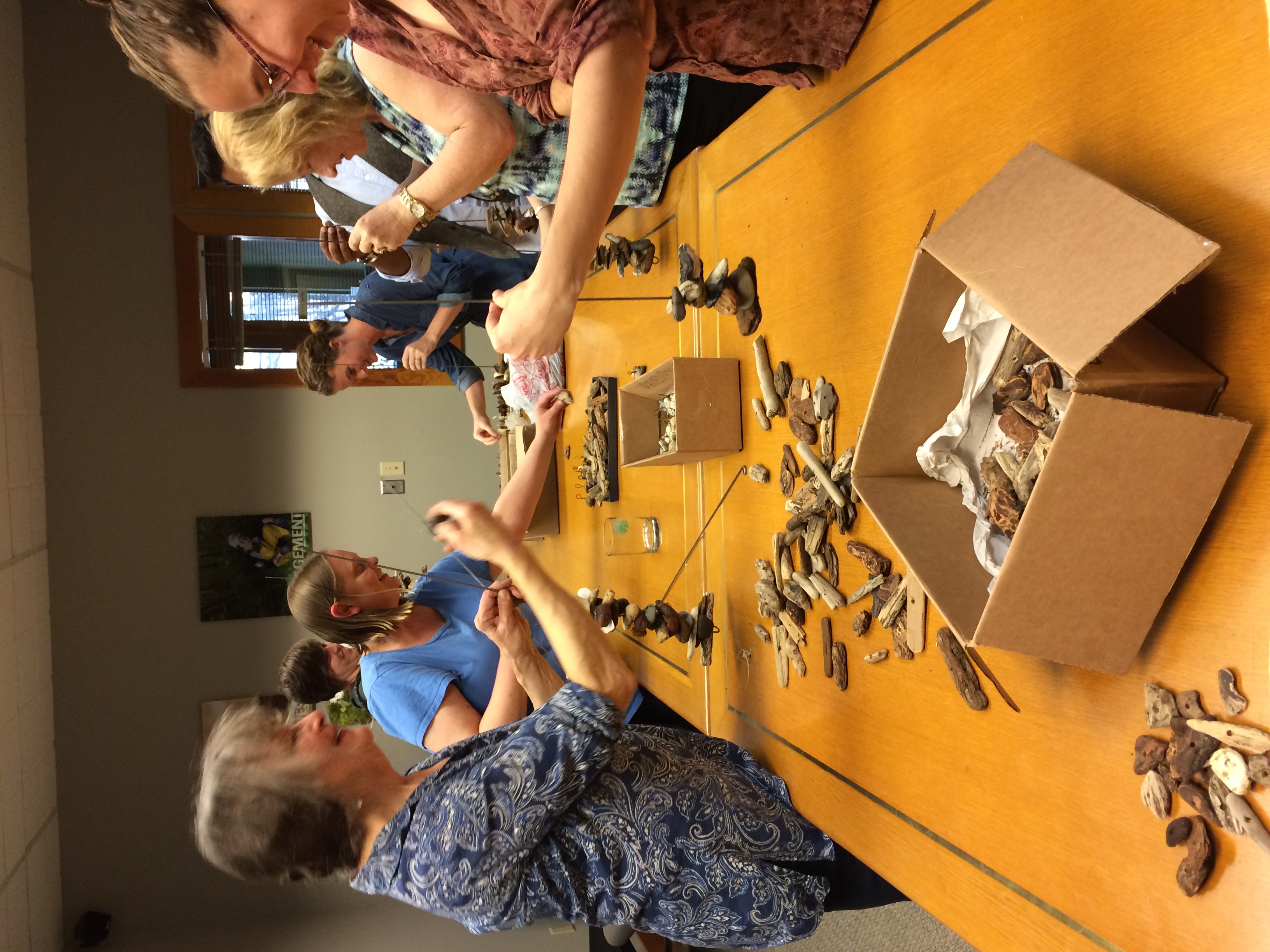
TNC staff and volunteers string the “sea-shore-shish-kabobs”.
I started working on Pacifica right after I finished an upcycled wedding dress called Bella. At the same time I was working on Pacifica I was starting another project called PDX Weather Advisory; both had to be completed at the same time in April. All that to say, there is no way I could have finished this sculpture (it took 270 hours) without the help of many volunteers! Over 20 people helped me in several work parties at the Oregon TNC headquarters and at SCRAP, a local reuse store in Portland. Volunteers prepared materials and helped to string the “sea-shore-shish-kabobs” made of drift wood, shells, rocks and fish bones that make up the skirt. Early in the project the OCEAN volunteered an invaluable gift to Pacifica: a huge pile of old Salmon bones was discovered by a TNC ecologist at another nearby estuary. The teeth, fins and especially vertebra became an essential part of the skirt. The little vertebra created space between the rocks, wood and shells which not only kept the wires from becoming too heavy, but they also helped to extend the materials (which we used ALL of) so that I had enough to complete the skirt. This also created a more open and airy visual feel to the skirt.
Pacifica has been on display this summer at the Bridgeport Shopping Center outside of Portland, TNC’s Julia Amato created a beautiful display located in a shop window on the way to the movie theater. In October Pacifica will be showcased at FashioNXT, a celebrated fashion week in Portland, OR. It will travel back down to Salmon River Estuary at the end of October for the 50 year celebration of Cascade Head Preserve, and then in 2017/2018 Pacifica will join the rest of my work in a solo exhibition in the Atlanta Airport for one year.
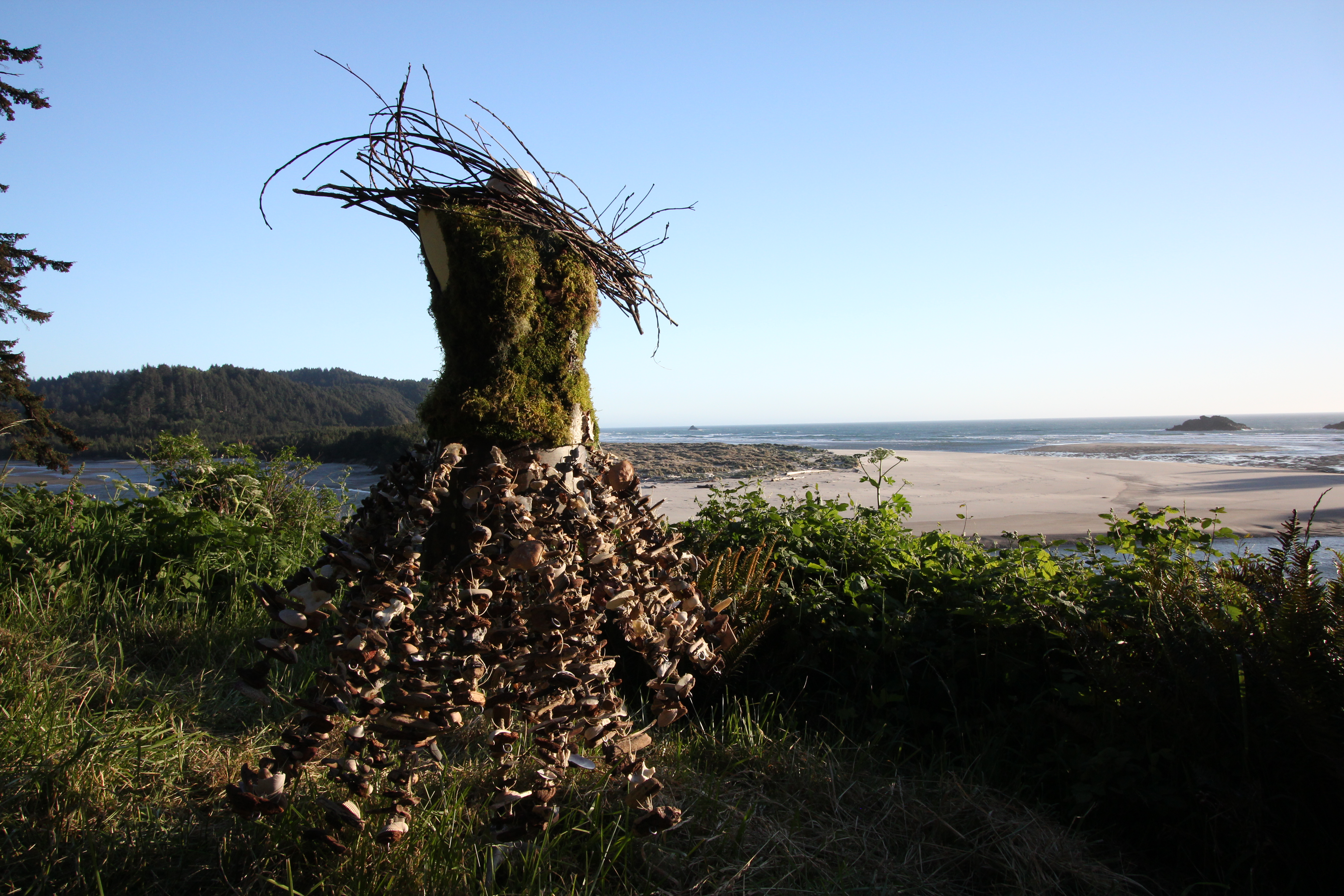
Pacifica above the Salmon River Estuary
For me Pacifica represents the wisdom of ancient forests regenerating themselves for billions of years. As leaves, shrubs, grasses and trees die and fall to the ground they become food and shelter for other life to grow; at Cascade Head I learned that in nature there is no such thing as waste. Pacifica also captures that sense of discovery the ocean offers as it delivers little gifts along the seashore every day. The sea is so comfortably consistent; for decades and centuries, for most of the life of this planet, the rhythm of the waves has been present like the heartbeat of the earth– the heartbeat of Pacifica.
A special heartfelt thank you to all the staff of The Nature Conservancy for each of your special contributions to this project: Julie Fitzgerald, Debbie Pickering, Julia Amato, Mitch Maxson, Deanna Brown, Christine Kessler, Kate O’Neill, Joe Buttafuoco, Teri Stoeber, Megan Fairbanks, Meredith Stewart, Nav Dayanand, Kim Lepre, Molly Dougherty
Additionally, I deeply appreciate the following individuals and organizations for your time, various contributions and encouragement:

Kevin welding the skirt
Nicole Morris-Judd
Brady Holden
Dave Pickering
Kevin Takalo
Palo Alto Software
Bridgeport Plaza – Mallorie Goody
SCRAP – Elizabeth Start and Lisa LeDouxAshley Smithers
Carol Knutson
Marilyn Ellis
Helena Tesselar
Myleen Richardson
Norma Gregor
Amarette Gregor
Jayne Vetter
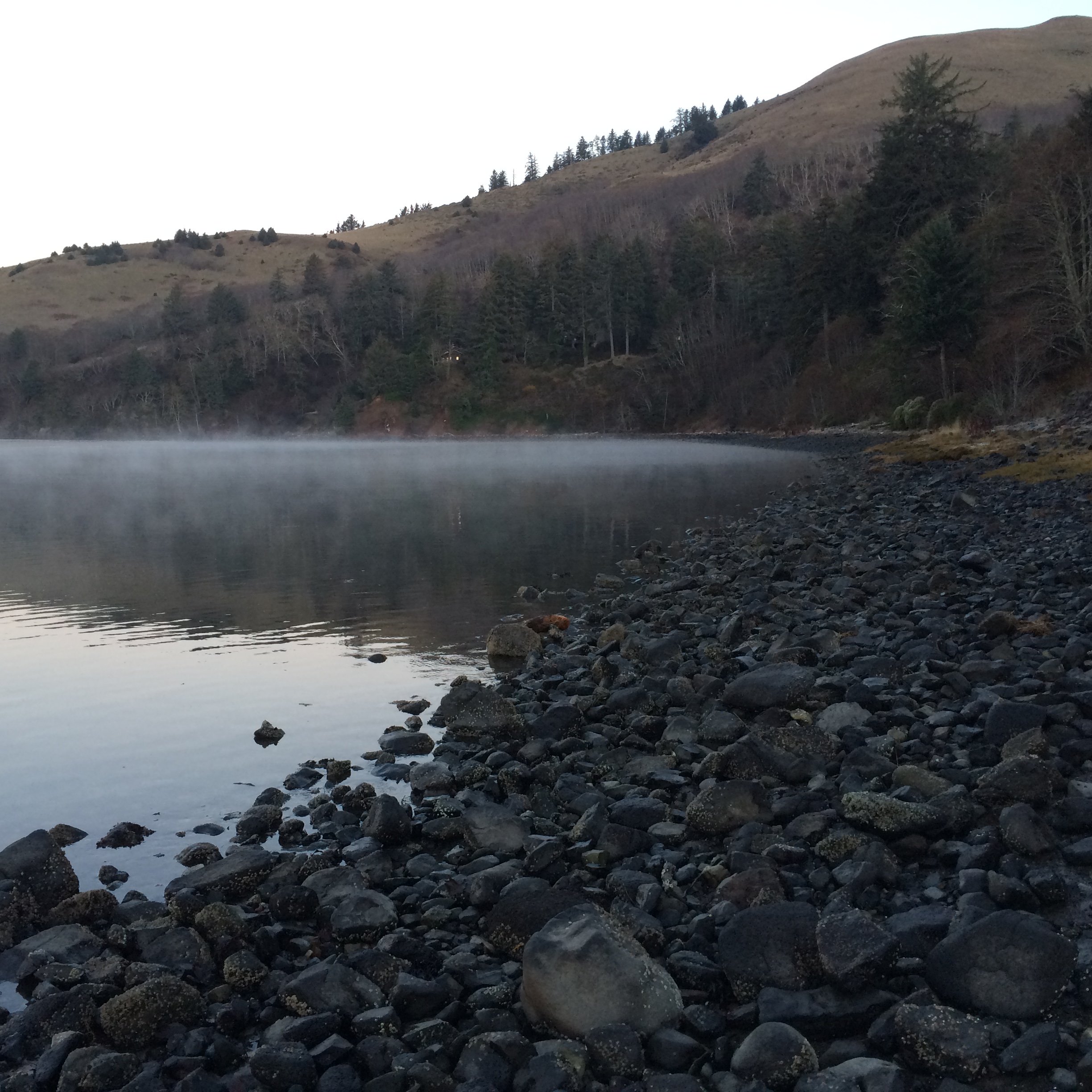
Morning view of Cascade Head from the Salmon River
Claire Darling
Gillian Nance
Cynthia Cada
Pat Reisinger
Harold Broughton
Lexie Ladd
Russel Parks
Julia White
Tiff Valentine
Tami Wheeler
Rose Lawrence
Ben Lawrence
Dave my neighbor
…and anyone else I forgot to mention!!

Gillian brushing Salmon teeth at SCRAP
Photo Credits: All photos by Nancy Judd except:
“Cascade Head and the Salmon River Estuary”: Jack Doyle
“Pacifica” and “Detail of Pacifica”: Brady Holden
“Pacifica above the Salmon River Estuary”: Nicole Morris-Judd
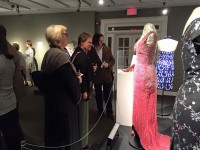
ReDress: Upcycled Style at the Stamford Museum
In September my traveling exhibition, ReDress: Upcycled Style, opened in the Stamford Museum and Nature Center in Stamford, Connecticut. I visited the exhibition to give a presentation and workshop. I also had an unexpectedly empowering experience, but first, a bit about the trip. One of the neat things about the Stamford Museum is that in addition to the museum they have a huge farm with animals. I am excited to have my work there because their mission blends the arts, environmental stewardship and life-long learning.
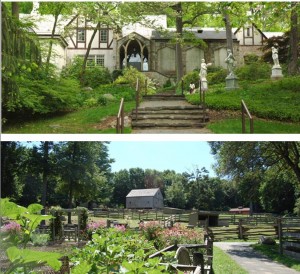
Stamford Museum and Nature Center
I also found the history of the site to be quite interesting, it was built by a fashion magnate, Henri Bendel. Mr. Bendel made his mark by becoming the first retailer to brand himself. Having registered his own trademark in 1895, he created the now legendary brown and white striped shopping bag and hatbox. Bendel was the first luxury retailer with an upper Fifth Avenue address, and the first to stage a fashion show. This fact was particularly interesting to me since I began creating my sculptures for (recycled) fashion shows, so I feel indebted to his creation of this now ubiquitous event, a fashion show. He was also responsible for bringing Coco Chanel to the United States. He built the large 10,000 square-foot, neo-Tudor mansion as a summer home in 1929 and the Museum moved into the property in 1955. I really enjoyed exploring the house, grounds and beautiful marble sculptures shipped from Italy. I like to think that Henri would have enjoyed my exhibition of couture fashion with a twist!
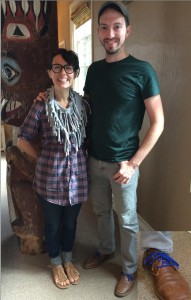
Check out Justin’s awesome new shoelaces and Amy’s fall scarf!
After a well attended gallery tour and talk, the staff held a beautiful farm-to-table meal that was also a fundraiser for the Museum. Coincidentally, it was my Birthday and I was delighted to have over 50 people sing to me while I blew out the candle on the tallest cupcake I had ever seen! The next day I taught one of my favorite workshops, transforming old T-shirts into new objects. We began by making over 20 dog toys for a local animal shelter, and then the 15 participants created items ranging from shoe strings to scarves and reworked shirts with new style. I was excited that Amy and Justin from the Trashion Fashion Show joined us, they stage “trashion” shows on the East Coast using ballet dancers as models. I also met a wonderful woman who’s family-owned business is interested in sponsoring a new sculpture from me. Thank you to all the Museum staff for hosting me and my traveling exhibition.
Now, back to my unexpected experience: whenever I visit my exhibition at a new museum I always spend a little time with the sculptures making minor repairs, mostly gluing glass back on to the Glass Evening Gown! This time I also worked on the Eco-Flamenco dress which is covered with eco-pledges made by 5,000 people. The Museum invites visitors to take their own eco-pledges and so on a whim, I filled out a pledge card and shared it that night during my gallery talk: “I will ask all of the hotels that I stay in to turn down the temperature in the mini-refrigerators”. This is a pet-peeve of mine because I always find them set on high, and I know that these refrigerators are used a very small percentage of the time they are on. When you think about the millions of hotel rooms around the world with refrigerators, this wastes a tremendous amount of energy which adds carbon to the atmosphere, unnecessarily contributing to climate change. So the day before I checked out of the Holiday Express Inn and Suites in Stamford (notably on the night of the full lunar eclipse and blood moon) I wrote my request on a comment card. By the time I returned home I had honestly forgotten about it until I received a note from the hotel manager saying: “We have shared your comments and feedback with our team and have started implementing (your suggestion) in our guest rooms.”
This was an empowering moment for me, I experienced how truly one small action can make a difference and it confirmed why I encourage people to make these pledges. I have since written to the parent company, InterContinental Hotels Group, to ask them to follow the lead of their hotel in Stamford and make this a policy at all of their properties.

Hotel room refrigerators, unnecessary contributors to climate change
I also did a little sleuthing around on the internet to see if I could find any information on the impact of mini-fridges in hotel rooms, the only thing I found was on www.KeyGreen.com, an organization in Denmark that awards eco-labels to over 2,400 hotels and other sites worldwide. They have their application form posted on-line and I was impressed to see a question asking the applying hotel if they have a policy to TURN OFF refrigerators (and TVs) when rooms are not in use. Not turn down, but turn OFF!
So, the next time you travel you might want to use this site, www.bookdifferent.com, to find a hotel that has a smaller carbon footprint. And if you encounter a refrigerator in your room, turn it to low (or off if you want to be radical) and leave a comment card for the hotel. And if they respond, please let me know!

Schack Art Center in Everett, WA
I was recently honored by being asked to emcee and show work in three trash-fashion shows across the great Pacific Northwest! Last summer I moved from Santa Fe, NM (my home for the last 20 years) to Portland, OR, where I grew up. It is great to be back in the climate that my body feels most comfortable in, and it’s exciting to discover new opportunities for my work in Oregon and Washington. Both states are renowned for their progressive sustainability efforts, and there is a lot of creative re-use, trash fashion, and innovative environmental education taking place here. Quite honestly, I did not know if there was room for another kid in the sand box, but I have been overwhelmed by the warm welcome I have received!

Upcycled Oregon in the State Capital
This spring started off with a bang at the Oregon State Capital in Salem where I emceed at a new event called Upcycle Oregon, created to raise awareness around resource use and waste reduction activities. The two day event began with a dynamic panel discussion featuring a diverse group of people that work with waste materials across Oregon. For example, Scott Hamlin is the co-founder/CEO of Loopworks which makes products and apparel out of industry scrap and waste materials such as old Southwest Airline seat covers. I really like this company because in addition to upcycling materials, they also design their products to be very durable and to be educational– as they state on their website: Only 1% of everything that’s purchased in the USA, is still in the USA after 6 months. That is an alarming statistic! Also on the panel was Mark Rumford with a company named Agilyx that is the first in the world to install commercial scale technology that turns waste plastics into refinery grade synthetic crude oil. That might not sound very exciting, but actually it’s a big deal because they can use the plastics that most recycling programs can’t take, which amounts to more than 75% of the plastics produced and usually landfilled. Their oil is recycled into plastic manufacturing feedstock or converted to transport fuels. I have grave concerns about the environmental and human health impacts of the huge amount of plastic we use and think we should focus on reducing our use of this material, especially single use items. However, like it or not our world is saturated with plastic and it is imperative to have a way to recycle it because not only does recycling keep it out of the landfills, but it also reduces the amount of oil we have to mine/refine.
This interesting panel was followed by an upcycled art exhibition, and then concluded with a trashion show the next day that showcased numerous new and seasoned designers. This was the first recycled fashion show that I have ever emceed in a state capital; it was a grand backdrop for the entire event and it felt significant to have our work honored in such an important historical and political location. I want to thank Carlee Wright from DIY Studio and and Jessica Ramey from Marion County who organized the upcycled art and fashion show, for inviting me to participate. DIY Studio is a neat organization that promotes creative, community and environmental awareness through teaching alternative approaches to creating art and diverting materials from the solid-waste stream.
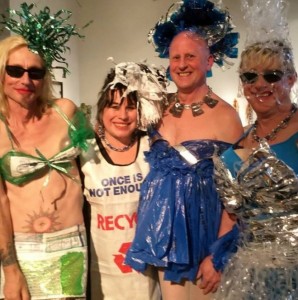
Ruby Re-Usable with her fantastic models Lana, Lova and Lena Landfill.
Three weeks later I emceed a second trashion show at the Schack (pronounced shack!) Art Center in Everett, WA held in conjunction with an impressive exhibition titled Saving the Environment: Sustainable Art. This was a fun event for me because I met several experienced designers from Washington who have also been working with waste materials for many years. One of these, Ruby Re-Usable, is the colorful designer who organized the fashion show. Some of the other designers were Rebecca Maxim aka Alotta DeTritus, Jane Grafton aka Tinker’s Dam, and Kristie Maxim aka Elle Poubelle. I really enjoyed not only their creative names and impressive designs, but also the presentation and staging of their fashions. Susie Howell, an amazing photographer as well as designer of wearable upcycled fashions, hosted my spouse and me in her beautiful historic Marysville home!
One of the many high points of this experience was meeting artist Terra Holcomb. I recommend you take a moment to look at her work; she is very, very inspiring to me. Terra works exclusively with natural materials and makes ephemeral pieces that she wears for self portraits. In fact, the resulting piece of art is the photo because she leaves the garments to decompose back into nature. One of her few pieces that still exists, a magestic oceanic gown made from muscle shells, was one of the featured designs of the evening.
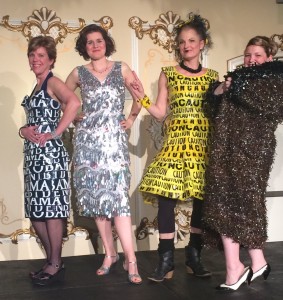
Washington State Recycling Association Conference
My Trashion Show Grand-Slam ended at the Washington State Recycling Association’s conference in Spokane, WA. Fashion show organizer, Abby Christensen invited me to join emcee Terra Heilman on stage at the elegant Davenport Hotel. I met yet another set of very talented designers and really enjoyed my time with the fun and dedicated group of Washington recyclers. As the previous executive director of the New Mexico Recycling Coalition, I was right at home with them and happy to have found my peeps.
Though I usually don’t participate in many trashion shows anymore, I had a great time at these events. (Most of my work these days revolves around creating new sculptures for my installation in the Atlanta Airport in 2017, and giving presentations and workshops to universities and various audiences.) It was like a door opened and I felt so welcomed this spring to Oregon and Washington by my colleagues in the upcycled art/fashion and waste reduction community, I’m so excited to become a part of these dynamic and warm-hearted groups!
I’m in the process of dreaming up some exciting new projects for my upcoming Atlanta exhibition with a number of local west coast groups including some the folks that I met at these events, so stay tuned for more details.
POST SCRIPT: I am writing this blog post while sitting on a train traveling back to Portland from Spokane, enjoying an absolutely beautiful ride along the Columbia River. As the train travels from the high desert climate of eastern Washington where Spokane is located, my heart swells at the site of the emerald green forests of the west side of this region. I longed for this land during the almost 30 years I lived outside of the Northwest, and find that, even now, after a short time away in a dryer area, I yearn for the moist climate my body was born to.
![IMG_5750[1]](https://recyclerunway.com/wp-content/uploads/IMG_57501-300x225.jpg)
Dawn over the Columbia River, from the train to Portland
![IMG_5778[1]](https://recyclerunway.com/wp-content/uploads/IMG_57781-300x225.jpg)
Emerald green views of the Pacific Northwest

